| Industry Sectors |
- Finance (e
Skill Sets and Overlaps: Technical Proficiencies in Cybersecurity and Software Engineering
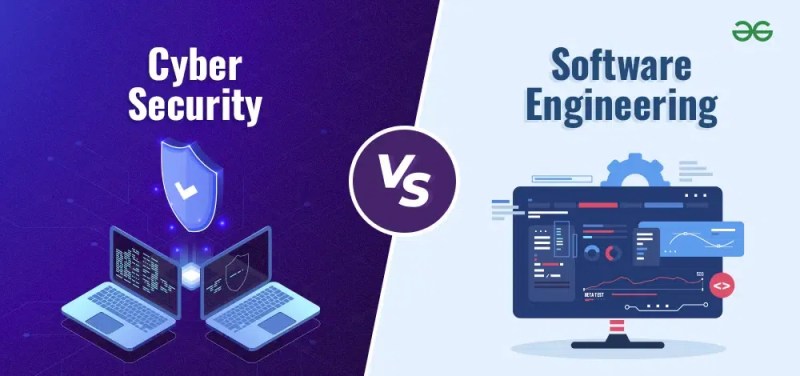
The distinction between cybersecurity and software engineering often hinges on their core technical skill sets, yet their convergence in modern system development demands an understanding of both specialized and hybrid competencies. Cybersecurity emphasizes defensive and offensive security measures, while software engineering focuses on system design, scalability, and functionality. However, the intersection of these fields—particularly in DevSecOps—requires professionals to master skills that bridge security and development lifecycles. This section categorizes the top technical skills unique to each discipline, identifies hybrid competencies critical for cross-functional roles, and explores educational pathways that facilitate seamless transitions between the two domains.
Top 10 Technical Skills Unique to Cybersecurity
Cybersecurity skills are designed to protect systems, data, and networks from threats through proactive and reactive measures. These competencies often involve specialized tools, methodologies, and a deep understanding of adversarial tactics. Below are the most critical skills, categorized by their functional focus:
- Penetration Testing and Ethical Hacking
Proficiency in exploiting vulnerabilities using frameworks like Metasploit, Burp Suite, and OWASP ZAP to simulate real-world attacks. This includes conducting black-box, white-box, and gray-box tests, as well as reporting findings in structured formats (e.g., PTES methodology).
Key Tools: Kali Linux, Cobalt Strike, Nessus.
- Incident Response and Forensics
Ability to detect, contain, and recover from security breaches using forensic tools (e.g., Autopsy, Volatility) and incident response frameworks (e.g., NIST SP 800-61). Skills include log analysis, malware reverse engineering, and compliance reporting (e.g., GDPR, HIPAA).
Critical Frameworks: MITRE ATT&CK, Diamond Model of Intrusion Analysis.
- Cryptography and Secure Communications
Deep knowledge of encryption algorithms (e.g., AES, RSA, ECC), key management, and protocols (e.g., TLS/SSL, PGP). Includes designing secure systems, evaluating cryptographic libraries, and mitigating side-channel attacks.
Standards: FIPS 140-2, NIST SP 800-57.
- Network Security and Firewall Administration
Expertise in securing network infrastructures, including configuring firewalls (e.g., Palo Alto, Cisco ASA), IDS/IPS systems (e.g., Snort, Suricata), and VPNs. Involves traffic analysis, intrusion detection, and compliance with network segmentation policies.
Protocols: TCP/IP, ICMP, BGP, DNSSEC.
- Threat Intelligence and Risk Assessment
Gathering and analyzing threat data from sources like OSINT, dark web monitoring, and vendor feeds (e.g., MISP, AlienVault OTX). Skills include risk scoring (e.g., CVSS), threat modeling (e.g., STRIDE, PASTA), and developing countermeasures.
Methodologies: MITRE D3FEND, CVSS v3.1.
- Security Compliance and Governance
Ensuring adherence to regulatory frameworks (e.g., ISO 27001, SOC 2, PCI DSS) through audits, policy development, and gap analysis. Includes experience with compliance tools (e.g., Drata, Vanta) and documentation of controls.
Frameworks: NIST CSF, COBIT, GDPR Article 32.
- Secure System Hardening
Minimizing attack surfaces by configuring OS-level security (e.g., SELinux, AppArmor), disabling unnecessary services, and applying least-privilege principles. Involves securing cloud environments (e.g., AWS IAM, Azure Security Center).
Best Practices: CIS Benchmarks, DISA STIGs.
- Malware Analysis and Reverse Engineering
Disassembling and analyzing malicious software using tools like Ghidra, IDA Pro, and Radare2. Skills include static and dynamic analysis, sandboxing (e.g., Cuckoo Sandbox), and developing detection signatures.
Techniques: Packing/Unpacking, API Hooking, Debugging.
- Security Architecture and Design
Designing secure systems from the ground up, including zero-trust architectures, microsegmentation, and secure API gateways. Involves evaluating third-party components for vulnerabilities (e.g., SAST/DAST tools).
Principles: Defense in Depth, Fail-Secure Design.
- Social Engineering and Human-Centric Security
Understanding psychological manipulation tactics (e.g., phishing, pretexting) and implementing countermeasures like security awareness training (SAT) and deception technology (e.g., honeypots).
Frameworks: OSSTMM, CREST Social Engineering.
Top 10 Technical Skills Unique to Software Engineering
Software engineering skills prioritize system design, performance optimization, and maintainability while ensuring functional correctness. These competencies are essential for building scalable, efficient, and user-centric applications. Below are the most critical skills, categorized by their technical domains:
- System Architecture and Design Patterns
Ability to design scalable, modular systems using patterns like MVC, microservices, and event-driven architectures. Includes capacity planning, load balancing, and trade-off analysis (e.g., consistency vs. availability).
Tools: UML, C4 Model, AWS Well-Architected Framework.
- Programming and Software Development
Proficiency in multiple languages (e.g., Python, Java, Go, Rust) and paradigms (OOP, FP). Focuses on writing clean, efficient, and maintainable code, with expertise in debugging (e.g., GDB, LLDB) and profiling (e.g., Valgrind).
Best Practices: SOLID Principles, DRY, KISS.
- DevOps and Continuous Integration/Deployment (CI/CD)
Automating software delivery pipelines using tools like Jenkins, GitLab CI, and ArgoCD. Skills include infrastructure-as-code (IaC) with Terraform/Ansible, containerization (Docker, Kubernetes), and monitoring (Prometheus, Grafana).
Pipelines: GitOps, Blue-Green Deployments.
- Database Design and Optimization
Structuring relational (SQL) and NoSQL databases for performance, scalability, and data integrity. Includes query optimization, indexing strategies, and migration techniques (e.g., PostgreSQL, MongoDB).
Concepts: ACID, CAP Theorem, Sharding.
- Cloud Computing and Distributed Systems
Leveraging cloud platforms (AWS, Azure, GCP) to deploy scalable applications. Skills include serverless architectures (Lambda, Cloud Functions), managed services (RDS, DynamoDB), and multi-cloud strategies.
Services: AWS EKS, Azure AKS, Google Cloud Run.
- Software Testing and Quality Assurance
Implementing test-driven development (TDD), unit testing (e.g., Jest, pytest), and end-to-end testing (e.g., Selenium, Cypress). Includes performance testing (e.g., JMeter, Locust) and security testing (SAST/DAST).
Methodologies: ISTQB, Agile Testing.
- Performance Engineering and Profiling
Optimizing application performance through benchmarking, caching (Redis, Memcached), and algorithmic improvements. Tools include APM solutions (New Relic, Datadog) and profiling tools (e.g., perf, VTune).
Metrics: Latency, Throughput, Resource Utilization.
- API Development and Integration
Designing RESTful/gRPC APIs with OpenAPI/Swagger specifications. Skills include authentication (OAuth 2.0, JWT), rate limiting, and integrating third-party services (e.g., Stripe, Twilio).
Standards: REST, GraphQL, WebSockets.
- Version Control and Collaboration
Managing code repositories using Git (GitHub, GitLab, Bitbucket) with advanced branching strategies (e.g., GitFlow). Includes code reviews, conflict resolution, and collaborative workflows (e.g., Agile, Scrum).
Commands: Rebase, Cherry-Pick, Squash Merge.
Methodologies and Processes in Cybersecurity and Software Engineering
Software engineering and cybersecurity employ distinct yet complementary methodologies to ensure system reliability, security, and efficiency. While Agile and DevOps prioritize iterative development, rapid deployment, and automation, cybersecurity frameworks like NIST CSF and MITRE ATT&CK focus on risk management, threat modeling, and structured incident response. The integration of secure coding standards (e.g., OWASP Top 10) into engineering workflows requires alignment between development velocity and security rigor, often facilitated by tools like SonarQube and Checkmarx. Below, the interplay between these methodologies is examined, with a step-by-step framework for embedding cybersecurity into software projects and a comparative analysis of architectural trade-offs influenced by security constraints.
Agile/DevOps Methodologies vs. Cybersecurity Frameworks
Agile and DevOps methodologies emphasize collaboration, automation, and continuous delivery, whereas cybersecurity frameworks (e.g., NIST Cybersecurity Framework, MITRE ATT&CK) provide structured risk management, threat intelligence, and compliance-driven processes. Their differences manifest in incident response, automation, and continuous improvement, though hybrid approaches (e.g., DevSecOps) bridge these gaps by embedding security into CI/CD pipelines.Incident Response
- Agile/DevOps teams rely on post-mortem analyses and automated alerts (e.g., Slack/Teams notifications) to address failures or breaches during sprints or deployments. Response times are prioritized for minimal downtime, with a focus on mean time to detect (MTTD) and mean time to recover (MTTR).
- Cybersecurity frameworks (e.g., NIST SP 800-61) define structured incident response phases: Preparation, Detection & Analysis, Containment, Eradication, and Recovery. These phases align with NIST IR 4.0, which incorporates automated playbooks (e.g., using SOAR tools like Splunk Phantom) and threat hunting to proactively identify anomalies.
- Key Divergence: Agile teams may lack formalized escalation paths, while cybersecurity frameworks mandate documented playbooks and forensic preservation for compliance (e.g., GDPR, HIPAA).
Automation
- DevOps leverages Infrastructure as Code (IaC) (e.g., Terraform, Ansible) and CI/CD pipelines (e.g., Jenkins, GitHub Actions) to automate deployments, testing, and rollbacks. Tools like ArgoCD or Flux enable GitOps for declarative infrastructure management.
- Cybersecurity automation focuses on threat detection (e.g., SIEM tools like Splunk or ELK Stack) and policy enforcement (e.g., Open Policy Agent for runtime security). Frameworks like MITRE ATT&CK provide automated mapping of adversary tactics (e.g., using MITRE’s ATT&CK Navigator) to detect malicious behavior in real time.
- Integration Challenge: DevOps automation often lacks security validation gates (e.g., SAST/DAST scans) unless explicitly configured in pipelines (e.g., via OWASP Dependency-Check or Trivy).
Continuous Improvement
- Agile/DevOps teams use retrospectives and metrics (e.g., velocity, deployment frequency) to refine processes. Tools like Prometheus or Datadog track system performance, while feature flags allow safe experimentation.
- Cybersecurity frameworks emphasize continuous monitoring (e.g., NIST CSF’s "Monitor" function) and threat intelligence feeds (e.g., MITRE’s ATT&CK Enterprise). Red teaming and penetration testing (e.g., via Burp Suite or Metasploit) simulate attacks to identify vulnerabilities iteratively.
- Synergy Point: DevSecOps merges these by incorporating security metrics (e.g., vulnerability density, patch lead time) into sprint goals and using automated compliance checks (e.g., Prisma Cloud for cloud security posture).
Secure Coding Standards and Integration into Software Workflows
Secure coding standards (e.g., OWASP Top 10, CWE/SANS Top 25) provide actionable guidelines to mitigate common vulnerabilities, but their effectiveness depends on tooling, developer training, and workflow integration. Static Application Security Testing (SAST) and Dynamic Analysis (DAST) tools automate vulnerability detection, though they have inherent limitations in coverage and false positives.Tooling and Workflow Integration
Static Analysis Tools (SAST) scan source code for vulnerabilities during development:
- SonarQube: Integrates with CI/CD pipelines (e.g., via SonarScanner) to flag issues like SQL injection, cross-site scripting (XSS), or hardcoded secrets. Supports custom rules for organization-specific policies.
- Checkmarx: Specializes in binary analysis and third-party dependency scanning (e.g., detecting Log4j vulnerabilities via Checkmarx SCA).
- Limitations: SAST tools may miss logic flaws or runtime vulnerabilities (e.g., race conditions) and generate false positives (e.g., flagging safe uses of `eval()` in JavaScript).
Dynamic Analysis Tools (DAST) test running applications:
- OWASP ZAP: Open-source tool for interactive scanning and API testing, often used in shift-left security (testing during development).
- Burp Suite: Provides automated scanning and manual penetration testing capabilities, ideal for web application security.
- Limitations: DAST requires a production-like environment, may miss unreachable code paths, and struggles with authenticated flows without proper session handling.
Secure Coding Practices in CI/CD
To embed security into workflows:
1. Shift Left: Integrate SAST/DAST into pre-commit hooks (e.g., via GitHub Actions or GitLab CI) to fail builds on critical vulnerabilities.
2. Dependency Management: Use tools like OWASP Dependency-Check or Snyk to scan Maven/Pip dependencies for known exploits (e.g., CVE databases).
3. Secrets Management: Enforce secret scanning (e.g., GitHub Secret Scanning) and vault integration (e.g., HashiCorp Vault) to prevent hardcoded credentials.
4. Runtime Protection: Deploy WAFs (e.g., Cloudflare, AWS WAF) or RASP (Runtime Application Self-Protection) tools (e.g., OpenRASP) to mitigate exploits at runtime. Example Workflow for a Mobile App with User Authentication | Phase | Security Action | Tools/Standards Applied |
|---|
| Design | Threat modeling (STRIDE) to identify risks in authentication flows. | Microsoft Threat Modeling Tool, OWASP ASVS |
| Development | Enforce OWASP Top 10 (e.g., A03:2021 Injection, A07:2021 Identification/Authentication Failures). | SonarQube, Checkmarx, Custom linting rules |
| CI Pipeline | SAST scan for SQLi/XSS, DAST for API endpoints, and dependency scanning. | OWASP ZAP, Snyk, GitHub Actions |
| Deployment | Use secure API gateways (e.g., Kong with OAuth2/JWT validation) and HSMs for key storage. | Kong Gateway, AWS KMS, Firebase Auth (for mobile) |
| Runtime | Monitor for brute-force attacks (e.g., via fail2ban) and anomalous logins. | SIEM (e.g., Splunk), AWS GuardDuty |
| Post-Deployment | Conduct red team exercises and penetration testing quarterly. | Burp Suite, Metasploit, Cobalt Strike |
Cybersecurity’s Influence on Software Architecture Decisions
Architectural choices directly impact an application’s attack surface, resilience, and compliance posture. Below are key trade-offs influenced by security requirements, presented as comparative insights.
Microservices vs. Monoliths: Trade-offs in Attack Surface and Isolation
Microservices architectures reduce blast radius by isolating components but increase attack surface due to inter-service communication (e.g., API gateways, service meshes). A monolith consolidates logic, simplifying security (e.g., unified authentication) but risks catastrophic breaches if a single vulnerability is exploited.
- Example: A monolithic e-commerce app may use a centralized auth service, while a microservices version requires per-service JWT validation and mTLS for service-to-service communication.
- Security Mitigation: Use zero-trust networking
The synthesis of cybersecurity and software engineering ultimately redefines the boundaries of secure development, transforming traditional silos into a cohesive framework where defense and functionality coexist. Professionals navigating this landscape must cultivate hybrid skills—such as secure coding, threat modeling, and DevSecOps integration—to address the escalating complexity of cyber threats while maintaining operational efficiency. As industries continue to prioritize resilience, the fusion of these disciplines will remain pivotal in shaping the future of technology, where every line of code written must also serve as a line of defense. The key takeaway lies in recognizing that security is not a constraint but a catalyst for building systems that are both robust and adaptable in an increasingly interconnected world.
|

Leave a Comment
Comments are moderated before appearing. The data you submit is processed according to the Privacy Policy of ir.msu.ac.zw.