| Threat Detection |
- Signature-based
Cybersecurity Frameworks and Standards: Global Compliance and Best Practices
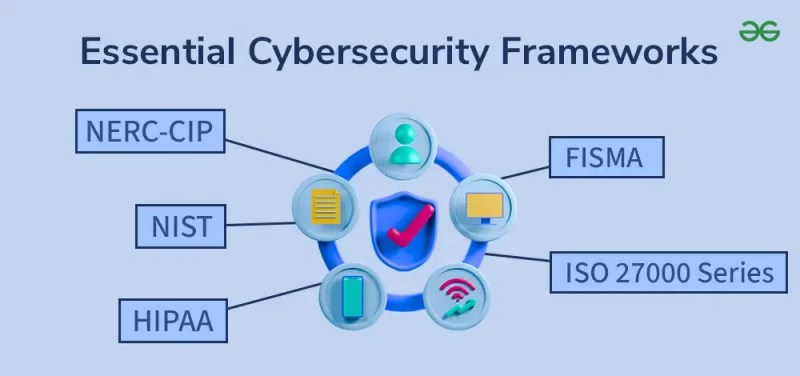
Cybersecurity frameworks and standards provide structured methodologies for organizations to manage risks, ensure compliance, and implement best practices tailored to their operational needs. These frameworks—developed by governmental bodies, industry consortia, and international organizations—serve as foundational blueprints for aligning security controls with regulatory requirements, business objectives, and emerging threats. Integration of these frameworks into existing security policies enhances resilience against cyber incidents while fostering consistency across global operations.The adoption of standardized frameworks reduces ambiguity in security governance, enabling organizations to demonstrate compliance to stakeholders, regulators, and customers. Below, key frameworks such as the NIST Cybersecurity Framework (CSF), ISO/IEC 27001, and CIS Controls are examined for their core components and practical implementation strategies. Additionally, jurisdictional comparisons between GDPR and CCPA highlight the distinct compliance measures required for data protection in the European Union and California, respectively. Sector-specific standards—such as HIPAA for healthcare, PCI DSS for finance, and FISMA for government—are summarized in a structured format, emphasizing their unique mandates. Finally, the alignment of organizational security controls with the MITRE ATT&CK framework is demonstrated as a proactive approach to threat detection and mitigation.
Key Components of NIST Cybersecurity Framework, ISO 27001, and CIS Controls
The NIST Cybersecurity Framework (CSF) is a voluntary, risk-based approach designed to help organizations manage cybersecurity risk by structuring security activities around five core functions: Identify, Protect, Detect, Respond, and Recover. Each function comprises categories, subcategories, and informative references to existing standards or guidelines. For example, the Identify function emphasizes asset management, risk assessment, and governance, while Protect focuses on access control, data security, and maintenance. Organizations integrate the CSF by conducting a risk assessment to prioritize controls, mapping existing policies to the framework’s categories, and iterating based on feedback from incidents or audits.The ISO/IEC 27001 standard, part of the ISO/IEC 27000 family, provides a systematic approach to managing sensitive company information by specifying requirements for an Information Security Management System (ISMS). Its Annex A lists 93 controls across 14 domains, including access control (A.9), incident management (A.16), and supply chain security (A.15). Implementation begins with a gap analysis to compare current practices against ISO 27001 requirements, followed by the development of a Statement of Applicability (SoA) to justify included/excluded controls. Certification requires third-party audits, ensuring compliance with international best practices. Unlike the CSF, ISO 27001 is mandatory for industries like finance (e.g., under PSD2 in the EU) and healthcare (e.g., HIPAA-aligned requirements). The CIS Controls (Center for Internet Security) are a prioritized set of 20 critical security activities, grouped into three implementation groups (IG1–IG3) based on maturity levels. IG1 focuses on foundational controls such as inventory and control of hardware/software assets (CIS Control 1) and secure configuration of assets (CIS Control 2), while IG3 addresses advanced practices like continuous monitoring (CIS Control 18) and penetration testing (CIS Control 19). Organizations integrate CIS Controls by assessing their current posture using the CIS Benchmarks (e.g., for Windows, Linux, or cloud services) and aligning them with NIST SP 800-53 or ISO 27001 where applicable. The CIS Critical Security Controls (CSC) are widely adopted due to their actionable, vendor-neutral approach, particularly in sectors like critical infrastructure and financial services. Integration Strategy for Existing Security Policies
Organizations often face challenges in harmonizing multiple frameworks. A layered approach is recommended:
1. Align with Business Objectives: Prioritize controls based on risk tolerance (e.g., a healthcare provider may emphasize HIPAA and ISO 27001 over CIS Controls).
2. Leverage Overlapping Controls: For example, NIST CSF’s "Protect" function and ISO 27001’s "Access Control (A.9)" share objectives like least-privilege access and multi-factor authentication (MFA).
3. Automate Compliance Tracking: Tools like ServiceNow GRC or RSA Archer can map controls across frameworks, reducing manual effort.
4. Continuous Improvement: Use NIST’s "Improve" function or ISO 27001’s PDCA (Plan-Do-Check-Act) cycle to refine policies post-incident or audit.
Comparison of GDPR and CCPA: Jurisdictional Compliance Measures
The General Data Protection Regulation (GDPR), enacted by the European Union (EU), and the California Consumer Privacy Act (CCPA), a state law in the U.S., both regulate data privacy but differ in scope, enforcement, and obligations. Below is a comparative analysis of their key requirements:
| Requirement |
GDPR (EU-Wide) |
CCPA (California) |
|---|
| Geographic Scope |
Applies to organizations processing data of EU residents, regardless of location. |
Applies to for-profit entities operating in California or processing data of California residents, with annual revenue exceeding $25 million. |
| Data Subject Rights |
- Right to access, rectification, erasure ("right to be forgotten"), and data portability.
- Right to object to processing and restrict processing under specific conditions.
- Right to automated decision-making transparency.
|
- Right to know what personal data is collected and disclose to third parties.
- Right to delete personal data (with exceptions for free speech, HR, or financial records).
- Right to opt-out of sale of personal data (no "right to be forgotten").
|
| Consent Management |
Requires explicit, granular consent with clear opt-out mechanisms. Consent must be freely given, specific, informed, and unambiguous (e.g., no pre-ticked boxes). |
Consent is not required for data collection if based on business necessity (e.g., transaction completion). Opt-out must be as easy as opt-in. |
| Data Breach Notification |
Mandates notification to supervisory authorities (e.g., CNIL) within 72 hours of breach discovery, and to affected individuals without undue delay. |
Requires notification to the California Attorney General within 72 hours of discovery, and to affected consumers if risk of harm is likely. |
| Penalties |
Fines up to €20 million or 4% of global annual revenue, whichever is higher (e.g., Amazon fined €746 million in 2021 for GDPR violations). |
Fines up to $7,500 per intentional violation and $2,500 per unintentional violation, capped at $7,500 per consumer per incident (e.g., H&M fined $650,000 in 2020). |
| Third-Party Obligations |
Requires data processing agreements (DPAs) with vendors, mandating subprocessing compliance and data protection impact assessments (DPIAs) for high-risk processing. |
Does not explicitly require DPAs but mandates contractual clauses prohibiting sale of consumer data without opt-out. |
Emerging Threats and Attack Vectors: Trends and Countermeasures
Cybersecurity threats evolve rapidly, driven by technological advancements, geopolitical tensions, and criminal innovation. The proliferation of AI-driven automation, the commoditization of ransomware through subscription models, and the exploitation of third-party dependencies have redefined threat landscapes. Organizations must adopt proactive strategies to counteract these vectors, balancing technical controls with human-centric defenses. Below, the analysis focuses on high-impact trends, their operational mechanics, and evidence-based mitigation frameworks.
AI-Driven Attacks and Automated Exploitation
AI and machine learning (ML) have transitioned from defensive tools to offensive weapons, enabling adversaries to scale attacks with unprecedented precision. Generative AI, such as large language models (LLMs), assists in crafting phishing emails, automating vulnerability scanning, and even generating malicious code. Adversarial ML exploits model weaknesses to bypass detection systems, while AI-powered reconnaissance automates target profiling using public data sources.Key attack vectors include:
- Automated phishing campaigns leveraging AI to personalize lures based on victim behavior (e.g., LinkedIn profiles, email patterns).
- Deepfake-assisted social engineering, where synthetic voice/video impersonations deceive multi-factor authentication (MFA) systems.
- AI-optimized malware that adapts to evade signature-based antivirus and behavioral analysis.
Mitigation strategies:
- Defense-in-depth for AI systems: Deploy anomaly detection models trained on adversarial examples, combined with static/dynamic analysis of AI-generated content (e.g., checking for unnatural speech patterns in audio deepfakes).
- Human-in-the-loop validation: Require manual review for high-risk transactions or communications flagged by AI as suspicious.
- Red teaming with AI: Simulate AI-driven attacks to test defenses, using tools like MITRE’s CALDERA or ATOMIC Red Team.
- Rate limiting and behavioral baselining: Monitor for sudden spikes in automated queries or deviations from user typological behavior.
"AI-driven attacks succeed not because of technical superiority, but because defenders often lack the agility to adapt their detection logic to evolving adversarial tactics."
— CISA, 2023 AI Threat Landscape Report
Ransomware-as-a-Service (RaaS) and Double Extortion
RaaS democratizes cybercrime by offering ransomware kits to affiliates with minimal technical expertise, while double extortion (exfiltrating data before encryption) increases pressure on victims. The LockBit and Conti gangs exemplify this model, with affiliates earning 60–90% of ransoms while operators provide infrastructure and support. Triple extortion—leveraging stolen data to blackmail third parties (e.g., customers, partners)—further escalates financial incentives.Operational tactics:
- Living-off-the-land (LotL) techniques: Abusing legitimate tools (e.g., PsExec, PowerShell) to evade detection.
- Domain Generation Algorithms (DGAs): Dynamically resolving command-and-control (C2) domains to bypass takedowns.
- Exploiting unpatched vulnerabilities: Prioritizing ProxyShell (CVE-2021-34523), Log4j (CVE-2021-44228), and ZeroLogon (CVE-2020-1472).
Countermeasures:
- Immutable backups with air-gapped storage: Ensure backups are offline, encrypted, and verified regularly (e.g., 3-2-1 rule).
- Network segmentation and least-privilege access: Isolate critical systems to limit lateral movement (e.g., Microsoft Defender for Identity).
- Deception technology: Deploy honeypots to detect reconnaissance (e.g., CrowdStrike’s Falcon Deception).
- Ransomware negotiation playbooks: Engage incident response (IR) firms (e.g., GuidePoint Security) to assess payment viability vs. recovery costs.
"The average ransom payment in 2023 reached $1.54 million, with 83% of organizations paying to recover encrypted data."
— Sophos, The State of Ransomware 2023
Supply Chain Attacks and Third-Party Risks
Supply chain attacks exploit trust in vendors, software updates, or cloud services to compromise downstream entities. The SolarWinds Orion breach (2020)—where Russian APT29 inserted malware into legitimate updates—highlighted the cascading impact of a single compromised vendor. Dependency confusion attacks (e.g., PyPI npm incidents) trick developers into installing malicious packages by hijacking repository names.Common attack vectors:
- Compromised software updates: Backdoored firmware (e.g., Kaseya VSA ransomware attack, 2021).
- Cloud supply chain risks: Malicious containers in Docker Hub or AWS Marketplace.
- Hardware implants: BadUSB or Malicious firmware in IoT devices (e.g., Supermicro motherboard tampering).
Risk mitigation framework:
- Vendor risk assessment: Implement NIST SP 800-161 for supply chain risk management, including:
- Attestation of compliance (e.g., SOC 2 Type II).
- Transparency into code/signing processes (e.g., SLSA framework).
- Software Bill of Materials (SBOM): Enforce SBOM generation for all dependencies (e.g., CycloneDX, SPDX).
- Isolated build environments: Prevent tampering by using air-gapped CI/CD pipelines.
- Continuous monitoring of third-party networks: Tools like Darktrace or Vectra AI detect anomalous vendor behavior.
"74% of organizations experienced a supply chain attack in 2023, with 60% resulting in data breaches."
— Gartner, Supply Chain Attack Surface Report
Deepfake Technology in Social Engineering
Deepfake audio/video impersonations exploit cognitive biases to bypass authentication and manipulate victims. CEO fraud (e.g., UK-based energy firm scammed via deepfake voice calls, 2021) and blackmail schemes (e.g., sextortion deepfakes) leverage synthetic media to bypass traditional security layers. Generative adversarial networks (GANs) and diffusion models (e.g., ElevenLabs, D-ID) lower the barrier to creation, with voice cloning achievable in minutes.Detection and prevention strategies:
- Multimodal verification: Combine liveness detection (e.g., Microsoft Azure Video Indexer) with behavioral biometrics (e.g., Typing rhythm analysis).
- Blockchain-based authenticity: Embed digital watermarks or NFT-like signatures in critical communications (e.g., Truecaller’s voice verification).
- Employee training: Simulate deepfake scenarios in phishing drills (e.g., KnowBe4’s AI-powered simulations).
- Technical controls:
- AI-driven anomaly scoring for audio/video files (e.g., Sensity AI).
- Hardware-based authentication (e.g., YubiKey for high-risk transactions).
"Deepfake detection accuracy drops to 50% when tested against unseen models, highlighting the need for adaptive solutions."
— MIT Media Lab, Deepfake Detection Benchmark 2023
Timeline of Major Cybersecurity Incidents: Execution and Aftermath
Below is a curated timeline of high-impact incidents, analyzing tactics, techniques, and procedural (TTP) commonalities, along with lessons learned for defensive postures.
| Incident |
Year |
Attack Vector |
Impact |
Commonalities |
Key Mitigation Applied Post-Incident |
|---|
| SolarWinds (APT29) |
2020 |
Supply chain (compromised Orion updates) |
18,000+ customers, $50M+ remediation |
- Long-dwell persistence (10+ months).
- Lateral movement via legitimate credentials.
- Exfiltration via DNS tunneling.
Cybersecurity technologies form the backbone of modern defense strategies, integrating advanced tools to detect, prevent, and mitigate threats in real time. These solutions range from foundational infrastructure like firewalls to sophisticated analytics platforms, each designed to address specific vulnerabilities while adapting to evolving attack vectors. The selection and deployment of these technologies depend on organizational needs, threat landscapes, and compliance requirements, with emerging innovations—such as AI-driven threat detection and decentralized identity systems—reshaping traditional security paradigms.The effectiveness of cybersecurity tools is measured by their ability to balance granularity, scalability, and usability. Next-generation firewalls (NGFWs) and endpoint detection and response (EDR) systems exemplify this by combining traditional perimeter defenses with behavioral analytics, while Security Information and Event Management (SIEM) systems centralize threat intelligence across heterogeneous environments. Meanwhile, multi-factor authentication (MFA) systems introduce layered verification mechanisms to counter credential theft, with hardware tokens, biometrics, and behavioral analytics each offering distinct trade-offs in security and convenience. Additionally, blockchain technology is increasingly adopted for immutable identity management and data integrity, leveraging cryptographic principles to eliminate single points of failure in digital trust frameworks.
Next-Generation Firewalls (NGFWs), Endpoint Detection and Response (EDR), and SIEM Systems
Next-generation firewalls (NGFWs) extend traditional firewall capabilities by integrating deep packet inspection (DPI), intrusion prevention systems (IPS), and application-aware proxies. Unlike legacy firewalls that rely on static IP-based rules, NGFWs analyze encrypted traffic, enforce granular access policies, and detect anomalies using machine learning. Their ideal use cases include securing hybrid cloud environments, enforcing compliance with regulations like PCI DSS or GDPR, and mitigating advanced persistent threats (APTs) that bypass perimeter defenses. For instance, Palo Alto Networks’ NGFWs employ threat intelligence feeds to block known malicious domains, while Cisco’s Firepower integrates with Talos Intelligence for real-time signature updates.Endpoint Detection and Response (EDR) systems focus on monitoring and responding to threats at the device level, where traditional antivirus solutions often fail. EDR platforms like CrowdStrike and Microsoft Defender for Endpoint collect telemetry from endpoints—such as process execution, network connections, and file modifications—to identify suspicious behavior patterns. These systems leverage behavioral analytics to distinguish between malicious activities (e.g., lateral movement by ransomware) and legitimate user actions, enabling automated containment and forensic investigation. Organizations with distributed workforces or bring-your-own-device (BYOD) policies benefit most from EDR, as it provides visibility into endpoints outside the corporate network. Security Information and Event Management (SIEM) systems aggregate and correlate log data from across an organization’s infrastructure to detect and respond to security incidents. Tools like Splunk and IBM QRadar use rule-based and AI-driven analytics to identify deviations from baseline activity, such as unauthorized access attempts or data exfiltration. SIEMs are critical for compliance reporting (e.g., generating audit logs for SOX or HIPAA) and incident response coordination, often integrating with Security Orchestration, Automation, and Response (SOAR) platforms to automate remediation workflows. Large enterprises with complex IT ecosystems—spanning on-premises, cloud, and IoT devices—rely on SIEMs to achieve centralized threat detection and reduce mean time to detect (MTTD) incidents.
Multi-Factor Authentication (MFA) Deployment: Hardware Tokens, Biometrics, and Behavioral Analytics
Multi-factor authentication (MFA) mitigates the risk of credential theft by requiring users to provide two or more verification factors from distinct categories: something they know (passwords), something they have (tokens), or something they are (biometrics). The deployment process involves assessing user workflows, selecting authentication factors based on security needs, and integrating with identity providers (IdPs) like Microsoft Azure AD or Okta. Hardware tokens, such as YubiKey or RSA SecurID, generate time-based one-time passwords (TOTP) or challenge-response codes, offering strong security but requiring physical possession. Biometric authentication—fingerprint, facial recognition, or vein pattern scanning—eliminates password fatigue and is widely adopted in mobile devices, though concerns over spoofing and privacy persist. Behavioral analytics, as implemented by solutions like BioCatch or TypingDNA, analyzes user interactions (keystroke dynamics, mouse movements) to detect anomalies without additional hardware.The choice of MFA method depends on organizational priorities. Hardware tokens provide high security for high-value targets (e.g., executive accounts) but introduce costs and user friction. Biometrics enhance convenience for consumer-facing applications (e.g., mobile banking) but may face regulatory scrutiny in regions with strict data protection laws. Behavioral analytics excels in detecting account takeovers by insiders or automated attacks, though false positives can disrupt legitimate users. For example, financial institutions often combine hardware tokens with behavioral biometrics to authenticate transactions, while healthcare providers may prioritize passwordless solutions to reduce phishing risks. Deployment best practices include phased rollouts, user training, and fallback mechanisms (e.g., SMS backup codes) to ensure accessibility.
The selection between open-source and proprietary cybersecurity tools hinges on factors such as cost efficiency, customization needs, and vendor support. Open-source solutions offer transparency, flexibility, and lower upfront costs, while proprietary tools often provide polished interfaces, dedicated support, and integration with enterprise ecosystems. Below is a comparative analysis focusing on cost, scalability, and ease of use, with examples from widely adopted tools.
| Criteria |
Open-Source Tools |
Proprietary Tools |
|---|
| Cost |
- No licensing fees; operational costs limited to infrastructure and maintenance (e.g., server resources for OSSEC).
- Community-driven development reduces dependency on vendor pricing models.
- Examples: Wireshark (network analysis), OSSEC (host-based intrusion detection), Snort (network IDS).
|
- Recurring licensing costs, often tied to features or user counts (e.g., Splunk’s per-GB pricing).
- Total cost of ownership (TCO) may include training, subscriptions, and premium support contracts.
- Examples: Splunk (log analysis), Darktrace (AI-driven threat detection), CrowdStrike (EDR).
|
| Scalability |
- Scalability depends on community contributions and custom scripting (e.g., extending Wireshark plugins).
- May require in-house expertise to optimize performance at enterprise scale (e.g., tuning OSSEC rules).
- Cloud-native open-source tools (e.g., Elastic Stack) offer auto-scaling but with configuration overhead.
|
- Designed for enterprise scalability with built-in load balancing and high availability (e.g., Darktrace’s global threat intelligence).
- Vendor-managed updates and cloud deployments simplify scaling (e.g., Splunk’s indexer clusters).
- Hardware requirements may be stricter for proprietary tools with proprietary formats.
|
| Ease of Use |
- Steep learning curve for non-technical users due to lack of official documentation or GUI polish.
- Customization requires familiarity with underlying codebases (e.g., modifying Snort rules).
- Community forums and third-party plugins (e.g., Wireshark dissectors) improve usability over time.
|
- User-friendly dashboards and pre-configured templates (e.g., Splunk’s SPL queries) reduce setup time.
- Dedicated customer support and training programs accelerate adoption.
- Integration with other proprietary tools (e.g., Microsoft Defender + Azure Sentinel) streamlines workflows.
|
| Use Cases |
- Ideal for organizations with IT expertise, budget constraints, or compliance needs for auditable code (e.g., government agencies using OSSEC).
- Common in research, education, and startups where agility outweighs support costs.
- Examples: Network forensics (Wireshark),
Human Factors in Cybersecurity: Training and Awareness
Cybersecurity is not solely dependent on technological defenses; human behavior plays a critical role in determining an organization’s resilience against cyber threats. Employees, executives, and third-party stakeholders often serve as the first and last lines of defense, making targeted training and awareness programs essential. Research indicates that 90% of cybersecurity breaches involve human error, with phishing alone accounting for over 80% of reported incidents (Verizon DBIR, 2023). This section explores the design of effective cybersecurity awareness programs, psychological manipulation tactics in social engineering, incident response tabletop exercises, and strategies for fostering a security-conscious organizational culture.
Designing a Cybersecurity Awareness Training Program for Employees
A well-structured cybersecurity awareness program must be modular, interactive, and tailored to role-specific risks while aligning with organizational policies. The program should integrate gamification, real-world simulations, and continuous reinforcement to ensure retention and engagement. Below is a framework for a quarterly training cycle, divided into core modules with measurable outcomes.Key Components of the Training Program
The program should include the following foundational modules, delivered through a mix of e-learning, workshops, and hands-on exercises:
-
Module 1: Recognizing Phishing and Social Engineering Attacks
Phishing remains the most prevalent attack vector, with spear-phishing success rates exceeding 60% when targeting executives (Proofpoint, 2022). This module teaches employees to:- Identify red flags in emails (e.g., mismatched URLs, generic greetings, urgent requests for sensitive data).
- Distinguish between legitimate and spoofed communications using tools like DMARC, SPF, and DKIM verification.
- Report suspicious emails via a dedicated reporting portal (e.g., Microsoft Defender for Office 365 or Mimecast).
- Participate in simulated phishing campaigns (e.g., KnowBe4, PhishMe) to test and improve detection skills.
Best Practice: Use adaptive phishing simulations that evolve based on employee performance, introducing more sophisticated lures (e.g., voice phishing, AI-generated deepfake audio).
-
Module 2: Secure Password and Authentication Practices
Weak or reused passwords are responsible for over 80% of data breaches (IBM Cost of a Data Breach Report, 2023). This module enforces:- Implementation of multi-factor authentication (MFA) for all accounts, with hardware tokens or app-based authenticators preferred over SMS.
- Use of password managers (e.g., Bitwarden, 1Password) to generate and store complex, unique passwords.
- Adherence to NIST SP 800-63B guidelines (e.g., minimum 12-character length, no forced password rotation).
- Regular password audits via tools like Microsoft Password Manager or LastPass Security Challenge.
Critical Insight: Enforce account lockout policies after 5–10 failed attempts to prevent brute-force attacks, while ensuring unlock procedures are documented and accessible.
-
Module 3: Reporting Suspicious Activity and Incident Escalation
Delayed reporting increases breach severity; 60% of breaches take months to detect (IBM, 2023). This module establishes:- A clear escalation pathway (e.g., tiered response teams for low/medium/high-severity incidents).
- Training on incident documentation (who, what, when, where, and potential impact).
- Integration with SIEM tools (e.g., Splunk, IBM QRadar) to log and analyze suspicious events.
- Annual tabletop exercises (detailed in a later section) to test response readiness.
Legal Compliance Note: Ensure reporting aligns with GDPR (Article 33), HIPAA (Section 164.313), and state-specific breach notification laws (e.g., California’s CCPA).
-
Module 4: Physical and Remote Workplace Security
With hybrid work models, physical security risks persist. This module covers:- Device security (e.g., full-disk encryption, endpoint detection and response (EDR) like CrowdStrike or SentinelOne).
- Secure remote access (e.g., VPNs with split tunneling, zero-trust network access (ZTNA)).
- Clean desk policies and BYOD (Bring Your Own Device) guidelines to prevent unauthorized access.
- Travel security (e.g., securing laptops in hotels, avoiding public Wi-Fi for sensitive transactions).
Training Delivery Methods
Effective programs combine multiple formats to cater to different learning styles:-
Microlearning: Short, 5–10-minute videos (e.g., animated phishing scenarios) delivered via Slack or Teams integrations.
-
Gamified Quizzes: Interactive challenges (e.g., PhishSim, Security Awareness Training by KnowBe4) with leaderboards and rewards.
-
Workshops and Lunch-and-Learns: Quarterly sessions led by Chief Information Security Officers (CISOs) or external experts.
-
Real-World Simulations: Quarterly phishing tests with personalized feedback on missed indicators.
-
Role-Specific Training: Tailored content for executives (whaling attacks), IT staff (misconfigurations), and HR (social engineering via job applications).
Measuring Program Effectiveness
Track key performance indicators (KPIs) to assess impact:-
Phishing Click Rates: Aim for a <5% click rate post-training (industry benchmark).
-
Reporting Speed: Measure mean time to report (MTTR) suspicious activity (target: <1 hour).
-
Compliance Adherence: 100% MFA adoption and zero password reuse in audits.
-
Employee Feedback: Annual surveys to gauge perceived usefulness and engagement.
Psychological Manipulation Tactics in Social Engineering and Countermeasures
Social engineers exploit cognitive biases and emotional triggers to bypass technical controls. Understanding these tactics enables employees to recognize and resist manipulation. Below are common psychological manipulation techniques and evidence-based countermeasures:Common Social Engineering Tactics
Social engineering relies on six primary psychological principles, as outlined in Robert Cialdini’s Influence: The Psychology of Persuasion:
-
Urgency and Scarcity
Attackers create false deadlines or limited-time offers to pressure victims into acting without thinking.- Example: "Your account will be locked in 24 hours unless you verify your identity now!"
- Countermeasure: Verify requests via secondary channels (e.g., call the IT helpdesk using a known number).
-
Authority
Imposters pose as executives, law enforcement, or IT support to exploit perceived hierarchy.- Example: "This is John from Legal—immediately send me your VPN credentials for an audit."
- Countermeasure: Request verification via out-of-band methods (e.g., in-person confirmation for sensitive requests).
-
Liking and Familiarity
Attackers mirror language, use personal details, or impersonate trusted contacts to build rapport.- Example: "Hi [Name], remember me from the conference last month? I need a quick favor..."
- Countermeasure: Double-check
Cybersecurity is no longer an optional safeguard but a strategic imperative in an interconnected world where data breaches can cripple operations and erode trust. By mastering the interplay between technical defenses, regulatory compliance, and human factors, organizations can transform potential risks into opportunities for resilience. The frameworks, tools, and awareness programs discussed here collectively form a blueprint for building adaptive, future-ready security postures. As threats evolve, so too must the strategies deployed to counter them—this overview equips stakeholders with the knowledge to navigate the complex cybersecurity landscape with confidence and precision.
|
|
|

Leave a Comment
Comments are moderated before appearing. The data you submit is processed according to the Privacy Policy of ir.msu.ac.zw.