Cybersecurity fundamentals form the bedrock of digital resilience in an era where threats evolve at unprecedented speeds. From safeguarding sensitive data in healthcare systems to securing financial transactions across global networks, the principles of confidentiality, integrity, and availability remain critical yet often misunderstood. This exploration dissects real-world applications of the CIA triad, contrasts emerging attack vectors against traditional malware, and examines how access control policies mitigate risks in dynamic environments. By bridging theoretical frameworks with practical implementations—such as firewall configurations and least-privilege access in cloud ecosystems—this guide equips professionals with actionable strategies to fortify digital infrastructures against increasingly sophisticated adversaries.
The modern threat landscape demands more than reactive measures; it requires a proactive understanding of attack lifecycles, from zero-day exploits to AI-driven phishing schemes. Organizations must navigate the delicate balance between robust security controls and operational usability, as demonstrated by high-profile breaches like Equifax and the trade-offs of disabling legacy protocols. Through structured breakdowns—including comparative tables, step-by-step procedures, and policy templates—this content provides a comprehensive toolkit for designing, deploying, and auditing cybersecurity measures tailored to diverse operational contexts.
Core Concepts of Cybersecurity Fundamentals: The CIA Triad and Real-World Applications
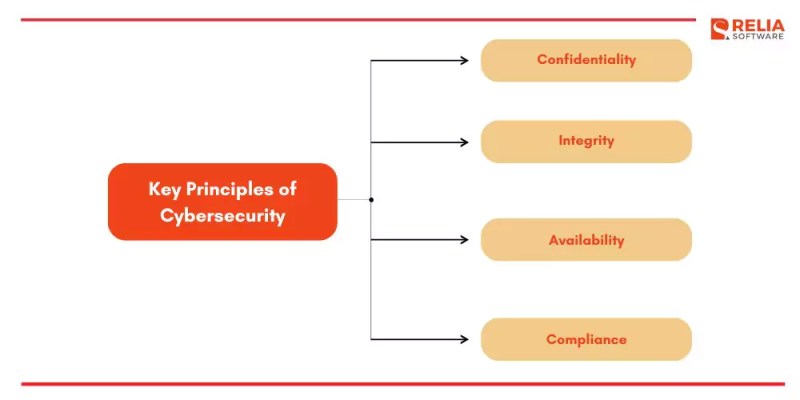
Cybersecurity fundamentals are built upon a structured framework that ensures the protection of digital assets against evolving threats. At the heart of this framework lies the Confidentiality, Integrity, and Availability (CIA) triad, a foundational model that defines core security objectives. These principles serve as the bedrock for designing secure systems, policies, and controls across industries. The CIA triad is not merely theoretical; its practical implementation directly influences risk mitigation, compliance adherence, and operational resilience in real-world environments.
The CIA triad operates as an interconnected system where the compromise of one principle can exacerbate vulnerabilities in others. For instance, a breach in confidentiality may lead to unauthorized data exposure, which could subsequently undermine integrity if attackers manipulate the compromised data. Understanding how each principle functions independently and in tandem with others is critical for developing robust security strategies tailored to specific organizational needs.
Confidentiality: Protecting Data from Unauthorized Access
Confidentiality ensures that sensitive information is accessible only to authorized individuals, entities, or systems. This principle is governed by access controls, encryption, and data classification policies, which collectively restrict exposure to unauthorized parties. In practice, confidentiality is enforced through mechanisms such as role-based access control (RBAC), multi-factor authentication (MFA), and encryption protocols (e.g., AES-256, TLS). The failure to maintain confidentiality can result in data leaks, intellectual property theft, or regulatory penalties, particularly in sectors handling personally identifiable information (PII) or trade secrets.
Key Implementation Strategies:
Data Classification: Categorize data based on sensitivity (e.g., public, internal, confidential, restricted) and apply corresponding access restrictions.
Encryption: Use symmetric (e.g., AES) and asymmetric (e.g., RSA) encryption for data at rest and in transit to prevent interception.
Access Controls: Deploy identity and access management (IAM) systems to enforce least-privilege principles, ensuring users have only the permissions necessary for their roles.
Audit Logging: Monitor and log access attempts to detect and respond to suspicious activity promptly.
Integrity: Ensuring Data Accuracy and Trustworthiness
Integrity guarantees that data remains unaltered and accurate throughout its lifecycle, free from unauthorized modifications. This principle is critical for maintaining trust in systems, especially in environments where data integrity directly impacts decision-making (e.g., financial transactions, medical records). Integrity is preserved through hashing algorithms (e.g., SHA-256), digital signatures, checksums, and version control systems. Compromised integrity can lead to severe consequences, such as financial fraud, misdiagnoses in healthcare, or misinformation campaigns.
Key Implementation Strategies:
Hashing and Checksums: Use cryptographic hashes to verify data integrity after transmission or storage. Any alteration in the data will produce a mismatched hash, indicating tampering.
Digital Signatures: Employ asymmetric cryptography to authenticate the origin of data and ensure it has not been altered. Digital signatures are widely used in contracts, software updates, and secure communications.
Write-Once-Read-Many (WORM) Storage: Implement WORM policies to prevent unauthorized modifications to critical data, such as legal documents or audit trails.
Input Validation: Sanitize and validate user inputs in applications to prevent injection attacks (e.g., SQL, XSS) that could compromise data integrity.
Availability: Ensuring Uninterrupted Access to Systems and Data
Availability ensures that systems, applications, and data are accessible to authorized users when needed, without unnecessary downtime or disruptions. This principle is underpinned by redundancy, disaster recovery planning, load balancing, and denial-of-service (DoS) mitigation strategies. Downtime or service unavailability can result in financial losses, reputational damage, or operational paralysis, particularly in industries like e-commerce, telecommunications, or critical infrastructure.
Key Implementation Strategies:
Redundancy and Failover Systems: Deploy redundant hardware (e.g., RAID arrays, backup servers) and failover mechanisms to maintain operations during hardware failures.
Distributed Denial-of-Service (DDoS) Protection: Use DDoS mitigation services (e.g., Cloudflare, Akamai) to absorb and filter malicious traffic, ensuring legitimate users retain access.
Regular Backups and Disaster Recovery: Implement automated, encrypted backups with a tested disaster recovery plan to restore systems quickly after incidents.
Load Balancing: Distribute traffic across multiple servers to prevent overload on a single system, improving responsiveness and uptime.
Comparative Analysis of the CIA Triad Across Industries
The CIA triad’s application varies significantly depending on the industry, as each sector faces unique threats and regulatory requirements. Below is a comparative table illustrating how confidentiality, integrity, and availability are prioritized and implemented in healthcare, finance, government, and retail environments, along with potential threats if compromised.
Principle
Definition
Example Use Case
Potential Threat If Compromised
Confidentiality
Restricting data access to authorized personnel only.
Healthcare: Patient medical records (e.g., HIPAA compliance). Implementation: Role-based access control (RBAC) and encryption of electronic health records (EHRs).
Unauthorized access to patient data leading to identity theft, blackmail, or violation of HIPAA (fines up to $1.5M per violation). Example: Anthem breach (2015), exposing 78M records due to weak access controls.
Integrity
Ensuring data remains accurate and unaltered.
Finance: Transaction records (e.g., SWIFT messages). Implementation: Digital signatures and blockchain for immutable transaction logs.
Tampered financial records leading to fraudulent transactions or regulatory non-compliance. Example: Bangladesh Bank heist (2016), where SWIFT credentials were manipulated to transfer $81M.
Availability
Ensuring systems are operational and accessible.
Government: Critical infrastructure (e.g., power grids, voting systems). Implementation: Redundant data centers and DDoS protection for election websites.
Cyberattacks causing prolonged downtime (e.g., ransomware) or disruption of public services. Example: Colonial Pipeline attack (2021), halting fuel distribution due to ransomware.
Confidentiality
Restricting data access to authorized personnel only.
Retail: Customer payment data (e.g., PCI DSS compliance). Implementation: Tokenization of credit card numbers and tokenization services (e.g., Stripe, PayPal).
Credit card fraud or reputational damage from data breaches. Example: Target breach (2013), exposing 40M credit card details via third-party HVAC vendor access.
False inventory records leading to stockouts or overstocking, impacting revenue. Example: Fake "flash sale" scams altering website inventory data to deceive customers.
Availability
Ensuring systems are operational and accessible.
Healthcare: Emergency room patient tracking systems. Implementation: High-availability clusters for hospital IT systems.
System outages delaying critical care or misdiagnoses due to inaccessible records. Example: UK NHS ransomware attack (2017), disrupting 16 hospitals and canceling 19,000 appointments.
Threat Landscape and Attack Vectors in Cybersecurity
The cyber threat landscape has evolved from opportunistic exploits to highly sophisticated, targeted campaigns driven by financial gain, espionage, and state-sponsored actors. Over the past decade, technological advancements—such as cloud adoption, IoT proliferation, and AI integration—have expanded attack surfaces while simultaneously enabling adversaries to refine their tactics. Understanding this evolution, along with emerging attack vectors and the shift from traditional malware to stealthier techniques, is critical for designing resilient defense strategies. This section examines the chronological progression of cyber threats, dissects modern attack vectors, and contrasts legacy malware with contemporary fileless threats, culminating in a structured analysis of zero-day exploit lifecycles.
Evolution of Cyber Threats: A Decade of Transformation
The past decade has witnessed four distinct eras of cyber threats, each defined by technological shifts, adversary motivations, and the introduction of novel attack methodologies. Below is a timeline outlining the defining characteristics of each era, emphasizing how threat actors adapted to exploit emerging vulnerabilities.
"The cyber threat landscape is not static; it evolves in tandem with technological innovation, often leveraging new attack surfaces before defenders can adapt."
The timeline is structured as follows:
1. 2010–2015: Ransomware Rise and Targeted APTs
Defining Threats: The era saw the proliferation of cryptographic ransomware (e.g., CryptoLocker, 2013) and the rise of Advanced Persistent Threats (APTs) linked to state actors (e.g., Stuxnet’s aftermath, Operation Aurora).
Attack Methods:
Ransomware-as-a-Service (RaaS): Criminal syndicates monetized infections via Bitcoin ransom demands, targeting healthcare (e.g., Hollywood Presbyterian Hospital, 2016) and financial sectors.
Watering Hole Attacks: Exploiting compromised third-party websites frequented by specific industries (e.g., energy, defense) to deliver malware (e.g., Duqu 2.0).
SQL Injection (SQLi): Mass exploitation of unpatched web applications (e.g., Sony Pictures hack, 2014) to exfiltrate data.
Technological Enablers: Growth of shadow IT, unpatched enterprise software, and the adoption of BYOD (Bring Your Own Device) policies.
2. 2016–2020: IoT Exploits and Supply Chain Compromises
Defining Threats: The Internet of Things (IoT) boom introduced new attack vectors, while supply chain attacks (e.g., NotPetya, 2017) demonstrated the cascading impact of third-party vulnerabilities.
Attack Methods:
IoT Botnets: Mirai (2016) and its variants exploited default credentials in routers/cameras to launch DDoS attacks (e.g., Dyn DNS attack, 2016).
Trusted Relationship Abuse: Compromising legitimate software updates (e.g., CCleaner malware, 2017) or firmware (e.g., CCleaner malware via Avast’s update servers).
Credential Stuffing: Automated attacks leveraging leaked credentials from past breaches (e.g., LinkedIn, MySpace) to gain access to corporate networks.
Technological Enablers: Cloud migration, containerization (Docker/Kubernetes), and the edge computing paradigm expanded attack surfaces.
3. 2021–2023: AI-Driven Attacks and Double Extortion
Defining Threats: The integration of AI/ML into offensive operations enabled hyper-personalized phishing, while double extortion (threatening to leak data if ransom isn’t paid) became standard in ransomware campaigns.
Attack Methods:
Deepfake Phishing: AI-generated voice/video impersonations of executives (e.g., UK law firm attack, 2021) to authorize fraudulent wire transfers.
AI-Powered Evasion: Malware using adversarial ML to bypass signature-based detection (e.g., Emotet variants).
Double Extortion Ransomware: Threat actors exfiltrated data before encryption (e.g., REvil, 2021) to pressure victims into paying.
Technological Enablers: Remote work proliferation, SaaS dependency, and homomorphic encryption challenges.
4. 2024–Present: Quantum Threats and Autonomous Cybercrime
Defining Threats: Quantum computing poses long-term risks to encryption (e.g., Shor’s algorithm breaking RSA), while autonomous malware (self-propagating, self-evolving) emerges.
Attack Methods:
Quantum Decryption Preparations: Adversaries stockpiling encrypted data (e.g., ransomware samples) to decrypt post-quantum era.
Autonomous Exploit Kits: Tools like SolarWinds-style backdoors with built-in lateral movement and evasion (e.g., Cobalt Strike automation).
AI-Generated Malware: Large Language Models (LLMs) used to craft polymorphic malware or generate convincing social engineering content.
Emerging Attack Vectors: Mechanics, Targets, and Mitigations
Modern cyber threats increasingly exploit human psychology, software supply chains, and emerging technologies to bypass traditional defenses. Below are five high-impact attack vectors, categorized by their operational mechanics, preferred industries, and actionable mitigation strategies.
"Emerging attack vectors prioritize stealth and persistence over brute-force methods, often leveraging legitimate tools or third-party dependencies to evade detection."
AI-Driven Phishing and Social Engineering
Attack Mechanics:
Natural Language Generation (NLG): AI crafts hyper-realistic emails/messages mimicking victim’s tone (e.g., executive impersonation).
Voice Cloning: Deepfake audio of executives or customer service reps to authorize payments (e.g., UK fraud case, 2021).
Dynamic Lure Customization: Phishing emails adapt based on victim’s role (e.g., HR receives "salary adjustment" lures).
Targeted Industries:
Financial Services (wire fraud, BEC scams).
Healthcare (HIPAA violations via fake patient records).
Manufacturing (firmware-based backdoors in industrial systems).
Government/Defense (supply chain APTs like SolarWinds).
Mitigation Strategies:
Software Bill of Materials (SBOM): Enforce automated SBOM generation (e.g., SPDX) to track dependencies.
Access Control and Identity Management
Access control and identity management form the bedrock of cybersecurity by ensuring that only authorized users and systems can access resources while maintaining accountability. These mechanisms mitigate unauthorized access risks, enforce compliance, and align with the principle of least privilege. Authentication verifies user identity, while authorization determines what actions they can perform. Together, they create a layered defense against credential theft, privilege escalation, and insider threats. Below, the interplay between authentication factors, authorization models, and their implementation in multi-factor authentication (MFA) workflows is examined, followed by a template for drafting access control policies and practical guidance for enforcing least-privilege access in cloud environments.
Authentication Factors and Authorization Models in MFA Workflows
Authentication factors and authorization models operate in tandem to validate identity and grant permissions. Authentication relies on multi-factor authentication (MFA), combining at least two of the three factor categories: something you know (e.g., passwords, PINs), something you have (e.g., hardware tokens, smartphones), and something you are (e.g., biometrics like fingerprints or facial recognition). Authorization models, such as role-based access control (RBAC) and attribute-based access control (ABAC), determine granular permissions based on predefined roles or dynamic attributes (e.g., time, location, device compliance).
The interaction between these components in an MFA workflow can be visualized as follows:
Factor 1: User enters a password (something you know).
Factor 2: User approves a push notification from an authenticator app (something you have).
Factor 3: User submits a fingerprint scan (something you are).
Result: Identity is verified only if all factors are satisfied.
2. Authorization Phase:
The system checks the user’s assigned role (e.g., "Finance Analyst" in RBAC) or evaluates attributes (e.g., "Department: Finance AND Time: 9 AM–5 PM" in ABAC).
Permissions are granted only if the user’s attributes match the access policy rules.
Result: Access is restricted to resources aligned with the user’s role or attributes.
Authentication Factors and Their Security Trade-offs:
Use Case: Continuous authentication (e.g., fraud detection).
Advantage: Passive and transparent to users.
Authorization Models and Their Application Scenarios:
Role-Based Access Control (RBAC):
Definition: Permissions are tied to predefined roles (e.g., "Admin," "Editor," "Viewer").
Example Workflow:
User logs in with MFA (authentication).
System assigns the role "HR Manager" based on job title.
Access granted to HR-specific databases and tools (e.g., payroll, employee records).
Pros: Simple to implement; scalable for hierarchical organizations.
Cons: Role explosion (too many roles); rigid for dynamic environments.
Attribute-Based Access Control (ABAC):
Definition: Permissions are dynamically evaluated based on attributes (e.g., user department, time of access, device compliance).
Example Workflow:
User authenticates via MFA (password + biometric).
System checks attributes: "Department: IT AND Time: 2 AM–6 AM AND Device: Approved Laptop."
Access granted only if all attributes match (e.g., allowing after-hours IT support).
Pros: Highly granular; adaptable to complex policies.
Cons: Complex to configure; requires robust attribute management.
MFA Workflow Integration:
Step 1: User initiates access request (e.g., logging into a SaaS application).
Step 2: System prompts for primary authentication (e.g., password).
Step 3: Secondary factor is triggered (e.g., SMS code, push notification, or biometric scan).
Step 4: Upon successful authentication, the system evaluates authorization:
RBAC: Maps user to a role (e.g., "Finance" → access to QuickBooks).
ABAC: Checks dynamic attributes (e.g., "IP in EU AND Device: Patched" → access to GDPR-compliant data).
Step 5: Access is granted or denied based on the evaluation.
Access Control Policy Template for Mid-Sized Organizations
A well-structured access control policy ensures consistency, reduces human error, and supports compliance with frameworks like NIST SP 800-53 or ISO 27001. Below is a numbered template tailored for a mid-sized organization (e.g., 500–2,000 employees) with hybrid cloud and on-premises infrastructure. The policy addresses user provisioning, privilege escalation, and audit logging, which are critical for maintaining security posture.
Policy Scope and Objectives:
Purpose: Define the scope of the policy, including systems, users, and third-party access (e.g., contractors, vendors).
Compliance Alignment: Reference applicable regulations (e.g., GDPR, HIPAA, state data privacy laws).
Example:
"This policy applies to all employees, contractors, and third-party vendors with access to [Organization]’s IT systems, including cloud platforms (AWS/Azure), on-premises servers, and SaaS applications. It ensures compliance with GDPR Article 5 (principle of data minimization) and NIST SP 800-53 AC-2 (access enforcement)."
User Provisioning and Deprovisioning:
Provisioning Process:
Request Workflow: Employees submit access requests via a ticketing system (e.g., ServiceNow, Jira).
Approval Chain: Managers approve requests based on job requirements; IT Security reviews for compliance.
Automation: Use Identity Governance and Administration (IGA) tools (e.g., SailPoint, Microsoft Identity Manager) to automate account creation in Active Directory, AWS IAM, and SaaS apps.
Deprovisioning Process:
Termination: Accounts are disabled within 1 hour of employee departure; revoked within 24 hours.
Offboarding: Run automated scripts to remove access from all systems (e.g., AWS CLI, PowerShell).
Audit Trail: Document all deprovisioning actions in the SIEM (e.g., Splunk, ELK Stack).
Privilege Escalation Procedures:
Justification and Approval:
Network Security Fundamentals
Network security operates as the backbone of digital infrastructure, ensuring the confidentiality, integrity, and availability of data transmitted across networks. The Open Systems Interconnection (OSI) model serves as a foundational framework for understanding how devices communicate and where vulnerabilities may arise. By mapping attack vectors and defensive controls to each layer, organizations can systematically identify risks and implement targeted protections. This section explores the OSI model’s role in cybersecurity, practical firewall configurations, network segmentation audits, and the trade-offs between security and usability, grounded in real-world examples.
OSI Model and Cybersecurity Attack Surfaces
The OSI model divides network operations into seven layers, each representing distinct functions and potential attack surfaces. Below is a structured breakdown of common threats and defensive controls mapped to each layer, formatted for clarity and actionable insights.
Layer
Function
Common Attack Vectors
Defensive Controls
Layer 7: Application
User interfaces, protocols (HTTP, FTP, SMTP).
SQL injection (e.g., exploiting unvalidated inputs in web apps).
Cross-site scripting (XSS) via malicious payloads in HTTP responses.
Protocol misconfigurations (e.g., enabling weak encryption in SMTP).
Input validation and sanitization (OWASP guidelines).
Web Application Firewalls (WAFs) to filter malicious traffic.
Regular patching of application software (e.g., Apache, Nginx).
Layer 6: Presentation
Data translation, encryption (SSL/TLS), compression.
Enforcing TLS 1.2/1.3 and disabling outdated protocols (e.g., SSLv3).
Certificate pinning to prevent spoofing.
Layer 5: Session
Managing connections (e.g., TCP/UDP sessions).
Session hijacking (e.g., stealing session cookies or tokens).
Denial-of-Service (DoS) via session exhaustion (e.g., SYN floods).
Session timeouts and token rotation policies.
Rate limiting to mitigate session-based attacks.
Layer 4: Transport
End-to-end communication (TCP, UDP, ports).
Port scanning (e.g., Nmap to identify open services).
SYN floods targeting TCP handshake vulnerabilities.
UDP-based amplification attacks (e.g., DNS reflection).
Firewall rules to restrict unnecessary ports (e.g., block 21/FTP, 3389/RDP).
SYN cookies to prevent TCP exhaustion.
Deep Packet Inspection (DPI) for anomaly detection.
Layer 3: Network
Logical addressing (IP, routing).
IP spoofing to bypass authentication.
Man-in-the-middle (MITM) via ARP poisoning.
Route hijacking (e.g., BGP leaks).
Static ARP entries or Dynamic ARP Inspection (DAI).
Network segmentation via VLANs or subnets.
Secure routing protocols (e.g., BGP with RPKI).
Layer 2: Data Link
MAC addressing, frames (Ethernet, Wi-Fi).
ARP spoofing to redirect traffic (e.g., MITM attacks).
MAC flooding to exhaust CAM tables (DoS).
Evil Twin attacks in Wi-Fi networks.
Port Security to restrict MAC addresses per switch port.
802.1X authentication for network access control.
Wireless intrusion detection systems (WIDS).
Layer 1: Physical
Transmission media (cables, signals).
Eavesdropping via fiber optic taps or RF interception.
Hardware tampering (e.g., backdoor access to routers).
Power supply attacks (e.g., voltage fluctuations to disrupt devices).
Physical access controls (e.g., locked server rooms, biometrics).
Encrypted transmission media (e.g., fiber optics over copper).
Redundant power supplies with surge protection.
Understanding these mappings enables security teams to prioritize defenses based on layer-specific risks. For example, Layer 2 attacks like ARP spoofing can be mitigated with VLANs, while Layer 4 SYN floods require firewall tuning or SYN proxy solutions.
Configuring a Basic Firewall to Block Common Ports
Firewalls act as the first line of defense by filtering traffic based on predefined rules. Below is a practical script for configuring `iptables` (Linux) and Windows Firewall to block high-risk ports (e.g., FTP, RDP) while preserving essential services like SSH (port 22) and HTTP/HTTPS (ports 80/443).
#### Linux (`iptables` Configuration)
# Flush existing rules (caution: removes all current rules)
sudo iptables -F
# Set default policies (DROP all incoming/forwarded traffic by default)
sudo iptables -P INPUT DROP
sudo iptables -P FORWARD DROP
# Allow loopback traffic
sudo iptables -A INPUT -i lo -j ACCEPT
# Allow SSH (port 22) from trusted IP ranges (replace X.X.X.X with your IP)
sudo iptables -A INPUT -p tcp --dport 22 -s X.X.X.X -j ACCEPT
# Allow HTTP (port 80) and HTTPS (port 443) for web services
sudo iptables -A INPUT -p tcp --dport 80 -j ACCEPT
sudo iptables -A INPUT -p tcp --dport 443 -j ACCEPT
# Block FTP (port 21) and RDP (port 3389) entirely
sudo iptables -A INPUT -p tcp --dport 21 -j DROP
sudo iptables -A INPUT -p tcp --dport 3389 -j DROP
# Allow ICMP (
Cybersecurity fundamentals are not static; they are a living framework that adapts to technological advancements and adversarial innovation. The principles of the CIA triad, threat intelligence, and access management serve as the cornerstones of defense, yet their effectiveness hinges on implementation precision and continuous vigilance. From configuring firewalls to segmenting networks and enforcing least-privilege access, every layer of security must align with organizational risk appetites while preserving functionality. As attack vectors grow more sophisticated—exploiting supply chains, leveraging AI, or targeting cloud misconfigurations—the foundational knowledge outlined here becomes indispensable. By adopting these strategies, professionals can transform cybersecurity from a reactive challenge into a strategic advantage, ensuring resilience in an interconnected world.

Leave a Comment
Comments are moderated before appearing. The data you submit is processed according to the Privacy Policy of ir.msu.ac.zw.