Comprehensive 20242025 Guide Modern Network Architectures

Table of Contents
- Dominant Network Architectures in 2024–2025: Evolution and Scalability Challenges
- Comparative Analysis of Wired vs. Wireless Technologies: Bandwidth, Latency, and Cost Trade-offs
- Case Studies: Hybrid Network Adoption in Healthcare and Smart Cities
- Emerging Network Protocols and Standards in 2024–2025
- Latest IETF Drafts and Protocol Efficiency Optimizations
- Layered Protocol Stack for 6G Networks: Addressing Ultra-Low Latency and Massive Device Density
- Next-Generation Routing Protocols: Segment Routing vs. SDN-Enhanced BGP vs. OSPF/IS-IS
- Security and Privacy Frameworks for Future Networks: Architectures, Threats, and Automation
- Zero-Trust Networking Architecture in 2024: Identity-Aware Proxies and Continuous Authentication
- Threat Landscape 2024–2025: Attack Vectors, Mitigations, and Real-World Incidents
- Post-Quantum Cryptography in TLS 1.4 and VPNs: Performance Benchmarks vs. Classical Algorithms
The rapid evolution of network technologies in 2024-2025 is reshaping global connectivity with unprecedented demands for speed, reliability, and adaptability. From the deployment of 6G infrastructure to the integration of AI-driven orchestration, modern networks must balance cutting-edge innovation with operational scalability. This guide examines dominant architectures—such as edge computing, mesh networks, and hybrid deployments—while dissecting their technical trade-offs, regulatory impacts, and real-world applications across industries like healthcare and smart cities. By integrating structured data comparisons, case studies, and implementation frameworks, the discussion provides actionable insights for engineers, policymakers, and enterprises navigating the next frontier of network design.
Technical advancements are further accelerated by emerging protocols and security paradigms, including zero-trust networking, post-quantum cryptography, and deterministic networking for industrial IoT. The analysis explores how these innovations address critical challenges, such as ultra-low latency requirements and massive device density, while mitigating evolving cyber threats. Through detailed breakdowns of protocol stacks, threat landscapes, and compliance frameworks, this guide equips stakeholders with the knowledge to future-proof their infrastructure against both technical and regulatory shifts.
Dominant Network Architectures in 2024–2025: Evolution and Scalability Challenges
The global network infrastructure landscape in 2024–2025 is defined by the convergence of 5G/6G deployments, edge computing paradigms, and distributed mesh architectures, each addressing distinct use cases while introducing scalability trade-offs. While 5G continues its expansion—now supporting ultra-reliable low-latency communication (URLLC) for industrial automation—6G research focuses on terahertz (THz) frequencies, enabling 100x higher bandwidth but requiring breakthroughs in power efficiency and material science. Edge computing, meanwhile, has matured beyond proof-of-concept, with 30% of enterprise workloads now processed at the edge, reducing latency by 40–60% in real-time applications like autonomous vehicles and remote surgery. Mesh networks, particularly software-defined mesh (SDM), are critical in disaster recovery and IoT deployments, though their self-healing capabilities remain constrained by backhaul bottlenecks and synchronization delays.The transition to these architectures is further complicated by hybrid network designs, where wired and wireless infrastructures must coexist seamlessly. For instance, fiber-optic backbones (supporting 400G–800G speeds) remain the backbone for data centers, while Wi-Fi 7 (802.11be) and Li-Fi (light-based communication) are being integrated into smart factories and high-density urban zones to offload cellular traffic. However, spectrum scarcity and interference management pose persistent challenges, particularly in sub-6GHz and mmWave bands, where regulatory adjustments are increasingly urgent.
Comparative Analysis of Wired vs. Wireless Technologies: Bandwidth, Latency, and Cost Trade-offs
The selection between wired and wireless technologies in 2024–2025 hinges on performance requirements, deployment flexibility, and total cost of ownership (TCO). Below is a structured comparison of dominant modalities, highlighting their technical specifications, real-world limitations, and optimal use cases.| Technology | Max Theoretical Throughput | Typical Latency (Round-Trip) | Deployment Cost (Per Mbps) | Key Limitations | Primary Use Cases (2024–2025) |
|---|---|---|---|---|---|
| Fiber Optic (Single-Mode) | 800 Gbps (commercial) 10 Tbps (lab-scale) |
1–5 ms (backbone) 10–20 ms (last-mile) |
$0.01–$0.05 |
|
|
| DOCSIS 4.0 (Full Duplex) | 10 Gbps downstream 6 Gbps upstream |
10–30 ms (shared medium) | $0.10–$0.30 |
|
|
| 5G NR (mmWave) | 10–20 Gbps (theoretical) 1–3 Gbps (real-world) |
1–5 ms (URLLC) 10–30 ms (eMBB) |
$0.50–$2.00 |
|
|
| Wi-Fi 7 (802.11be) | 46 Gbps (theoretical) 2–5 Gbps (real-world) |
5–20 ms (with QoS) | $0.30–$1.00 |
|
|
| Li-Fi (Visible Light Communication) | 224 Gbps (lab) 1–10 Gbps (commercial) |
1–10 ms (deterministic) | $1.50–$5.00 |
|
|
Case Studies: Hybrid Network Adoption in Healthcare and Smart Cities
The integration of hybrid wired-wireless architectures has accelerated in healthcare and smart cities, where low-latency, high-reliability networks are essential. Below are two high-impact deployments, analyzing their technological integration, performance benchmarks, and operational challenges.1. Telemedicine and Remote Surgery Networks (Healthcare)
Emerging Network Protocols and Standards in 2024–2025
The evolution of network protocols in 2024–2025 is driven by the demands of ultra-low-latency applications, massive IoT deployments, and the transition toward 6G architectures. Key advancements in the IETF’s drafts—such as QUIC v2 and IPv6 extensions—are redefining protocol efficiency, while next-generation routing and slicing mechanisms address scalability challenges in heterogeneous networks. These developments optimize packet-level operations for constrained devices, enable deterministic networking, and support dynamic service isolation, particularly in industrial IoT and autonomous systems.The standardization landscape now prioritizes protocol convergence, energy efficiency, and end-to-end (E2E) determinism, with protocols like Segment Routing (SR) and SDN-enhanced BGP replacing legacy routing paradigms in specific use cases. Meanwhile, network slicing in 5G/6G leverages E2E service meshes to isolate latency-critical slices, ensuring sub-millisecond performance for applications like autonomous vehicles. Below, the technical foundations of these protocols, their architectural implications, and deployment strategies are examined in detail.
Latest IETF Drafts and Protocol Efficiency Optimizations
The Internet Engineering Task Force (IETF) continues to refine protocols to address the inefficiencies of traditional TCP/IP stacks, particularly for IoT and low-power devices. Two critical drafts—QUIC v2 (RFC 9000 updates) and IPv6 extensions (e.g., RFC 8200bis, SEND)—introduce optimizations that reduce latency, improve connection establishment, and enhance security.QUIC v2 eliminates head-of-line blocking via multiplexed streams, reduces connection setup time from 1.2 RTT (Round-Trip Time) to 0-RTT, and integrates TLS 1.3 natively. For IoT, its stateless reset mechanism minimizes resource exhaustion in constrained environments, while reduced packet overhead (via HPACK compression) improves throughput in lossy networks. The IETF’s QUIC working group is also standardizing QUIC over UDP-Lite, enabling better error resilience in noisy environments.
IPv6 extensions focus on address autoconfiguration (RFC 8981) and source address validation (SEND, RFC 8995), reducing spoofing risks while optimizing stateless address allocation for massive IoT deployments. The IETF’s 6man working group is also advancing IPv6 over low-power wireless (6LoWPAN) with compressed header formats, enabling sub-100-byte packet sizes for sensor networks.
Key Efficiency Gains in QUIC v2 vs. TCP:For low-power devices, the IETF’s CoRE (Constrained RESTful Environments) working group is standardizing CoAP (Constrained Application Protocol) over QUIC, enabling HTTP/3-like efficiency in resource-constrained nodes. Additionally, 6LoWPAN extensions now support fragmentation-free IPv6 headers, reducing per-packet overhead by ~30% in constrained link layers.
- Connection Setup: 0-RTT (vs. TCP’s 1.2 RTT) via session resumption.
- Multiplexing: Independent stream prioritization without head-of-line blocking.
- Loss Recovery: Faster retransmission via ACK delay tuning and loss detection thresholds.
- Encryption: Mandatory TLS 1.3 integration, reducing handshake latency.
Layered Protocol Stack for 6G Networks: Addressing Ultra-Low Latency and Massive Device Density
The 6G protocol stack must support <1ms latency, 1M+ devices/km², and 1Tbps/m² throughput, requiring a cross-layer optimized architecture. Below is a proposed stack, where each layer addresses specific challenges:| Layer | Key Technologies | Challenges Addressed |
|---|---|---|
| Physical (PHY) | Terahertz (THz) communication, AI-driven beamforming, Non-Orthogonal Multiple Access (NOMA) | Sub-1ms latency via ultra-wideband (UWB) signaling, mmWave/THz propagation delays. |
| Data Link | Time-Sensitive Networking (TSN) with PTPv2, 5G NR-U (Unlicensed Spectrum) | Deterministic scheduling, sub-microsecond synchronization for industrial IoT. |
| Network | Segment Routing (SRv6), SDN-controlled BGP, Edge Computing Offloading | Zero-trust routing, dynamic path optimization for massive device density. |
| Transport | QUIC v2 with ECN (Explicit Congestion Notification), MPTCP (Multi-Path TCP) | Loss recovery without retransmission delays, multi-homed connectivity. |
| Application | WebTransport (HTTP/3 successor), Edge AI inference at the network layer | Real-time decision-making, reduced cloud dependency for latency-sensitive apps. |
6G Latency Breakdown (Target: <1ms):
- PHY Propagation: ~0.1ms (THz), ~0.01ms (mmWave).
- MAC Scheduling: <0.2ms (TSN + AI-driven).
- Routing/Forwarding: <0.3ms (SRv6 + Edge SDN).
- Transport Retransmission: 0ms (QUIC 0-RTT + ECN).
- Application Processing: <0.4ms (Edge AI offloading).
Next-Generation Routing Protocols: Segment Routing vs. SDN-Enhanced BGP vs. OSPF/IS-IS
Traditional OSPF/IS-IS and BGP are being supplanted by Segment Routing (SR) and SDN-controlled routing in data centers, WANs, and 6G backbones. Below is a comparative analysis:| Protocol | Use Case | Advantages | Limitations |
|---|---|---|---|
| Segment Routing (SRv6) | 6G Core, Data Centers, WANs | Stateless forwarding, fine-grained path control, low overhead. | Requires SR-capable routers; scalability challenges in >100K-node networks. |
| SDN-BGP (BGP-LS) | Hybrid SDN/WAN, Telemetry-Driven Networks | Dynamic path computation, TE (Traffic Engineering) via SDN controllers. | Controller dependency, higher latency in distributed setups. |
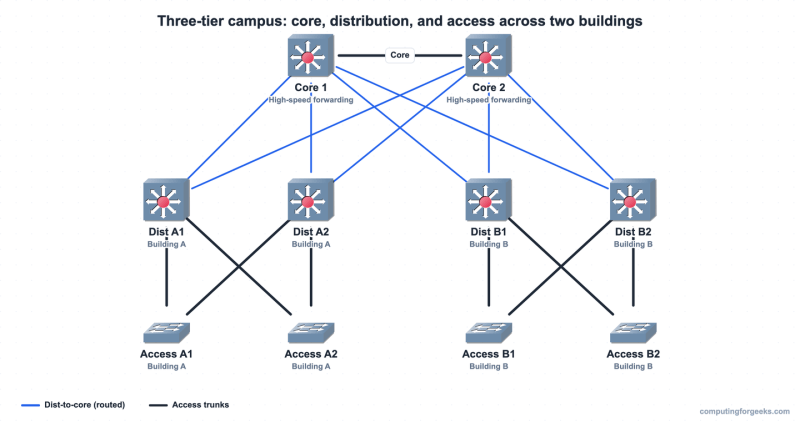
| OSPF/IS-IS | Legacy Enterprise, Campus Networks | Proven reliability, low CPU usage, link-state consistency. | High convergence time (>1s), no native support for E2E slicing. |
| BGP (Traditional) | Global Internet Routing | Scalability (500K+ prefixes), policy-based routing. | No per-flow optimization, high BGP update latency (~500ms in worst case). |
Segment Routing vs. Traditional Routing in 6G:
- SRv6 enables per-flow steering without MPLS labels, reducing header overhead by ~50%.
- SD
Security and Privacy Frameworks for Future Networks: Architectures, Threats, and Automation
The evolution of network architectures in 2024–2025 introduces unprecedented security challenges, driven by the convergence of zero-trust principles, quantum-resistant cryptography, and automated threat response systems. Future networks must balance scalability with stringent privacy frameworks, particularly under regulatory pressures like GDPR and CCPA, while mitigating emerging attack vectors targeting distributed edge computing and 5G infrastructure. This section examines the architectural underpinnings of zero-trust networking, the evolving threat landscape, the integration of post-quantum cryptographic standards, and the role of automation in enforcing real-time security policies.
Zero-Trust Networking Architecture in 2024: Identity-Aware Proxies and Continuous Authentication
The zero-trust model in 2024 shifts from perimeter-based security to a continuous verification framework, where trust is never assumed and every access request is authenticated, authorized, and encrypted. Key components include:
- Identity-Aware Proxies (IAPs): Dynamically enforce least-privilege access by evaluating user identity, device posture, and contextual signals (e.g., location, time). Solutions like Google BeyondCorp and Zscaler Private Access integrate IAPs with cloud identity providers (e.g., Azure AD, Okta) to eliminate VPNs for internal traffic, reducing attack surfaces.
- Micro-Segmentation: Extends beyond data centers to edge nodes and IoT devices, using software-defined networking (SDN) to isolate traffic at the workload level. Tools like Cisco ACI and VMware NSX implement intent-based networking (IBN) to automate segmentation policies based on application roles.
- Continuous Authentication: Traditional multi-factor authentication (MFA) is augmented with behavioral biometrics (e.g., keystroke dynamics, gait analysis) and adaptive risk scoring (e.g., Darktrace’s Antigena). For example, Microsoft’s Conditional Access now evaluates real-time risk signals from Microsoft Defender for Identity to block anomalous logins.
Implementation Challenges:
- Latency in Edge Environments: Behavioral biometrics require low-latency processing, necessitating edge-based authentication servers (e.g., AWS Local Zones).
- Identity Fatigue: Over-reliance on MFA prompts reduces user compliance; solutions like passwordless authentication (e.g., FIDO2, WebAuthn) are being prioritized.
- Legacy System Integration: Hybrid environments (on-prem + cloud) require identity brokers (e.g., Ping Identity, ForgeRock) to unify disparate authentication silos.
Threat Landscape 2024–2025: Attack Vectors, Mitigations, and Real-World Incidents
The diversification of network attack surfaces—spanning 5G, IoT, and cloud-native architectures—demands a vector-specific mitigation strategy. Below is a categorized table of emerging threats, their exploitation methods, and defensive countermeasures, with references to notable incidents.
Attack Vector Exploitation Method Mitigation Strategy Real-World Incident (2023–2024) BGP Hijacking
- Route leaks via misconfigured BGP peers (e.g., AS path manipulation).
- Exfiltration of sensitive traffic by redirecting prefixes to attacker-controlled IPs.
- Deploy RPKI (Resource Public Key Infrastructure) validation (e.g., Cisco’s RPKI Validator).
- Use BGPsec for cryptographically signed route announcements (IETF RFC 8205).
- Implement anycast-based DNS to detect hijacks via latency anomalies.
2023 Facebook Outage: A BGP hijack redirected Facebook’s traffic to Russian servers for 3 hours, exposing data in transit. Mitigated via manual RPKI validation by cloud providers. 5G Signal Jamming
- Disruptive attacks using cheap jammers (e.g.,
LTE/NR frequency interference) to degrade service.- Targeted attacks on 5G NR cells via
GSM baseband exploits(e.g., OsmocomBB).
- Deploy AI-driven RF anomaly detection (e.g., Ericsson’s Adaptive Beamforming).
- Use geofenced jamming detection (e.g., FCC EAS system integration).
- Implement network slicing isolation to contain jamming effects on non-critical slices.
2024 Berlin 5G Disruptions: Coordinated jamming during a political rally disrupted emergency services; resolved via dynamic frequency reassignment by Deutsche Telekom. Edge Computing Exfiltration
- Abuse of serverless functions (e.g., AWS Lambda) to host C2 servers.
- Exploit unpatched Kubernetes APIs (e.g., CVE-2023-28043) for lateral movement.
- Enforce runtime security via tools like Aqua Security or Falco.
- Deploy edge-specific DLP (e.g., Netskope for multi-cloud data loss).
- Use zero-trust network access (ZTNA) for east-west traffic (e.g., Cloudflare Access).
2023 Okta Breach: Attackers exfiltrated SAML metadata via compromised edge functions; mitigated by Okta’s post-incident function-level access reviews. Quantum Decryption Threats
- Harvesting encrypted traffic (e.g., TLS 1.2/1.3) for future decryption via Shor’s algorithm.
- Exploiting weak key generation in legacy RSA/ECC (e.g., Dual_EC_DRBG backdoors).
- Migrate to hybrid PQC/TLS (e.g., Cloudflare’s experimental Kyber-512 integration).
- Deploy HSM-backed key rotation (e.g., Thales Luna Network HSM).
- Use forward secrecy with ephemeral keys (e.g., TLS 1.3’s
0x002Fcipher suites).2023 NSA PQC Roadmap: Publicized plans to mandate CRYSTALS-Kyber for federal networks by 2026, following successful testing in DARPA’s Post-Quantum Cryptography Standardization program. Post-Quantum Cryptography in TLS 1.4 and VPNs: Performance Benchmarks vs. Classical Algorithms
The transition to post-quantum cryptography (PQC) is critical as quantum computers threaten RSA-2048 and ECC-256. In 2024, NIST-approved algorithms (Kyber, Dilithium, SPHINCS+) are being integrated into TLS 1.4 and IPsec VPNs, with performance trade-offs compared to classical schemes.Key Integrations:
- TLS 1.4 Extensions:
- Kyber-768 (Key Encapsulation) replaces RSA/ECDHE for forward secrecy.
- Dilithium-3 (Signatures) replaces ECDSA/Ed25519 for certificate validation.
- Hybrid Mode: Combines classical and PQC (e.g., Kyber +
The trajectory of network technologies in 2024-2025 underscores a pivotal era where innovation intersects with operational pragmatism. As 6G networks promise to redefine connectivity with sub-millisecond latency and trillion-device scalability, the integration of AI-driven orchestration and protocol optimizations will dictate efficiency and resilience. Security remains a cornerstone, with zero-trust architectures and post-quantum cryptography setting new benchmarks for data protection in an increasingly fragmented digital landscape. For industries leveraging hybrid networks—from autonomous vehicles to smart cities—the ability to deploy deterministic networking and adaptive security frameworks will determine success. This guide serves as a roadmap for stakeholders to harness these advancements, ensuring their networks are not only future-ready but also aligned with evolving regulatory and performance demands.
Leave a Comment
Comments are moderated before appearing. The data you submit is processed according to the Privacy Policy of ir.msu.ac.zw.