Bloods Crips Exploring Intersection Street Legacies

Published

bloods crips exploring intersection street - Kesimpulan
Table of Contents

The intersection of Florence and Normandie in South Central Los Angeles stands as a symbolic battleground where the histories of the Bloods and Crips gangs collided, shaping not only urban violence but also cultural narratives of resilience and systemic neglect. Emerging from the socio-economic fractures of the late 1960s and early 1970s, these rival factions became emblematic of deeper societal tensions—policing failures, economic disparity, and the erosion of community trust. Beyond their infamous territorial disputes, their influence extends into music, media, and modern street culture, where symbols and ideologies persist despite shifting urban landscapes. This exploration dissects their origins, territorial evolution, and enduring impact on Los Angeles, revealing how geography, policy, and media have intertwined to define their legacy.

From the red and blue hand signs etched into gangsta rap lyrics to the gentrification-driven displacement of historic conflict zones, the Bloods and Crips represent a complex intersection of crime, culture, and systemic injustice. Their narratives challenge simplistic portrayals, exposing the roots of urban gang formation while highlighting the adaptive strategies that have allowed these groups to endure across generations. By examining legal crackdowns, economic exploitation, and contemporary truce initiatives, this analysis uncovers the layers of influence that continue to shape marginalized communities today.

Historical Context and Origins of the Bloods and Crips Rivalry in South Central Los Angeles

The formation of the Bloods and Crips gangs in the late 1960s and early 1970s was deeply rooted in the socio-economic disparities, racial tensions, and systemic neglect of Black communities in Los Angeles. Emerging from the decaying urban infrastructure and limited opportunities for marginalized youth, these gangs initially served as informal support networks before evolving into violent, territorial organizations. Their rivalry was not spontaneous but a product of deliberate gang expansion, police surveillance, and the fragmentation of Black political movements during a period of heightened racial unrest.

The origins of the Bloods and Crips can be traced to the post-World War II era, when Black families migrated from the American South to Los Angeles in search of economic stability. However, systemic racism, redlining, and underfunded public services concentrated poverty in neighborhoods like South Central, Compton, and Watts. By the 1960s, these areas became breeding grounds for youth gangs, which provided a sense of belonging, protection, and economic alternatives in the absence of state support.

Key Social and Economic Factors Driving Gang Formation

The emergence of the Bloods and Crips was influenced by several intersecting factors, including:
  • Deindustrialization and Job Loss: The decline of manufacturing jobs in Los Angeles left young Black men without viable employment, increasing reliance on informal economies, including drug trafficking and street entrepreneurship.
  • Police Brutality and Institutional Distrust: Incidents such as the 1965 Watts Riots, triggered by police harassment, deepened community distrust in law enforcement, pushing youth toward self-governance through gangs.
  • Housing Discrimination and Overcrowding: Redlining policies and urban renewal projects displaced Black families into segregated, high-density neighborhoods, fostering close-knit but volatile social structures.
  • Cultural Shifts and Youth Alienation: The Civil Rights Movement’s decline in the late 1960s left many Black youth disillusioned, while the rise of gangsta rap in the 1980s later romanticized gang life as a form of resistance.
  • These conditions created a vacuum that gangs filled, offering structure, identity, and economic opportunities—albeit through criminal means. The Bloods and Crips, in particular, capitalized on these dynamics, framing their existence as a response to systemic oppression.

    Timeline of Key Events Shaping the Bloods and Crips Rivalry

    The rivalry between the Bloods and Crips did not begin as an organized conflict but evolved from territorial disputes, police crackdowns, and ideological clashes. Below is a chronological breakdown of pivotal events:
    1. 1969: Formation of the Crips
      The Crips emerged in the streets of South Central Los Angeles, initially as a loose affiliation of youth gangs under the leadership of Stanley "Tookie" Williams and Raymond Washington. Their early structure was decentralized, with small crews operating independently before consolidating under a shared blue bandana symbol.
      The Crips’ original name, "Crip," derived from the slang term for a disabled person, reflecting their early members' physical vulnerabilities in gang fights.
    2. 1972: Police Crackdown and Gang Fragmentation
      The Los Angeles Police Department (LAPD) intensified surveillance and arrests of Crips members, leading to internal power struggles. This period saw the rise of Boyle Heights Crips and Piru Street Crips, who later became the dominant factions.
    3. 1973: Emergence of the Bloods
      The Bloods formed as a splinter group from the Crips, initially under the leadership of Siri "Sire" Jarell and Mickie "Mook" D. Their red bandana symbolized a rejection of Crips authority, though their origins remain debated—some accounts suggest they were created by LAPD informants to weaken the Crips.
    4. 1979: The "Bloods vs. Crips" Label Solidifies
      By this time, the two groups had established distinct territories, with the Crips controlling areas like Compton and South Central, and the Bloods dominating Watts, Huntington Park, and parts of Inglewood. Police raids and inter-gang violence escalated, formalizing the rivalry.
    5. 1980s: Expansion Through Drug Trafficking
      The crack cocaine epidemic transformed gang economies, with both the Bloods and Crips becoming major distributors. This period saw the rise of Bloods factions like the PMS (Pirus, Mikes, and Sures) and Crips sets such as the 83rd Street Gangster Crips, each with defined territories.
    6. 1992: Rodney King Riots and Increased Militarization
      The acquittal of LAPD officers in the Rodney King trial sparked six days of riots, during which gangs clashed with police and each other. The federal government’s Weed and Seed program (1990s) later attempted to suppress gang activity through a mix of law enforcement and social services, with limited success.

    Early Gang Structures, Leadership, and Territorial Divisions

    The Bloods and Crips initially operated as fluid, neighborhood-based organizations before adopting hierarchical structures in the 1970s and 1980s. Their territorial divisions were influenced by both geographic proximity and internal power dynamics.
    Gang territories were not static; they shifted based on arrests, leadership changes, and police pressure. However, by the 1980s, the following divisions became standardized:
    1. Crips Territorial Organization
      The Crips divided their operations into sets, each named after a street or neighborhood. Key early sets included:
      • Boyle Heights Crips (BHC): Controlled areas near Boyle Heights, initially led by Raymond Washington.
      • Piru Street Crips (PSCs): Dominated Piru Street in South Central, later becoming one of the most powerful Crips factions.
      • 83rd Street Gangster Crips: Emerged in the 1980s, taking control of 83rd Street in Compton.
      • Southside Crips: Operated in the Florence-Firestone area, often clashing with Bloods factions like the Florence 13s.
      Leadership was often informal, with "OG" (Original Gangster) status granted to founders or long-standing members. The Crips’ Five-Point Creed (later adopted) emphasized loyalty, unity, and respect for elders.
    2. Bloods Territorial Organization
      The Bloods structured themselves into cliques, each with a distinct color or symbol. Major early cliques included:
      • Pirus (Pirus): Named after the Piru Street Crips, the Pirus were a dominant Bloods faction in Watts and Huntington Park.
      • Mikes (Mikes): Controlled areas in South Los Angeles, often clashing with Crips sets like the Avenues.
      • Sures (Sures): Operated in Compton and Lynwood, frequently in conflict with the Piru Street Crips.
      • Florence 13s: A Bloods set based in Florence-Firestone, known for violent turf wars with the Southside Crips.
      Bloods leadership was similarly decentralized, with shot callers (de facto leaders) emerging based on age, criminal record, or charisma. The Bloods’ Six-Point Star symbolized their rejection of Crips authority, though their ideology was less formalized than the Crips’ early creed.
    3. Inter-Gang Boundaries and Neutral Zones
      Certain streets and neighborhoods served as buffer zones where both gangs avoided direct conflict, such as:
      • Central Avenue: Historically a neutral corridor due to its commercial importance.
      • Parts of West Adams: Less gang-controlled, allowing for limited movement between territories.
      • School Zones: Some areas near high schools (e.g., Jordan High) saw temporary truces during academic years.
      These zones were not permanent and could shift based on gang expansion or police operations.

    Comparative Analysis: Early Bloods and Crips Ideologies, Symbols, and Recruitment Methods

    While both gangs emerged from similar socio-economic conditions, their ideologies, symbols, and recruitment strategies differed in key ways. Below is a structured comparison:

    Cultural Impact and Symbolism of Bloods and Crips

    The Bloods and Crips have transcended their origins as street gangs to become potent symbols in American urban culture, their influence extending into fashion, music, visual art, and media. Their colors, hand signs, tattoos, and aesthetic codes have been codified into a visual language, while their narratives have been immortalized in hip-hop, film, and television. This cultural imprint often blurs the line between representation and stereotype, reflecting broader societal tensions around race, poverty, and systemic marginalization. Below, the significance of these elements is examined, alongside their evolution and the role of media in shaping public perception.

    Colors and Visual Identifiers

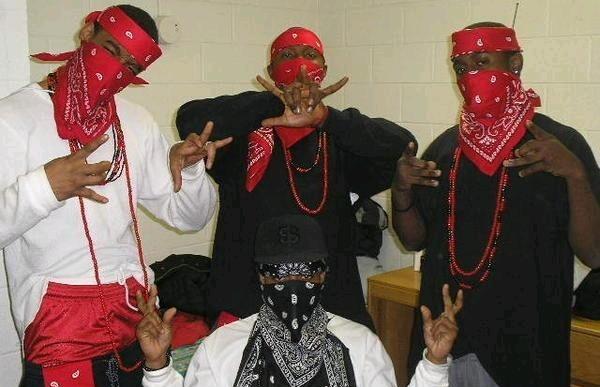
    The use of color as a marker of gang affiliation is one of the most recognizable aspects of Bloods and Crips symbolism, rooted in early territorial disputes and the need for visual distinction. The Crips adopted blue as their primary color, derived from the blue bandanas worn by Stanley "Tookie" Williams and his associates in the late 1960s. Conversely, the Bloods adopted red, a direct rebuttal to the Crips’ blue, symbolizing their opposition and the bloodshed that followed. Over time, these colors became standardized in clothing, bandanas, and even graffiti, creating an immediate visual shorthand for affiliation.

    The evolution of these colors has also incorporated secondary hues:

  • Crips: Blue remains dominant, but variations include light blue, navy, and sometimes green (used by subsets like the Bounty Hunters or 8th Street Gangster Crips).
  • Bloods: Red is primary, with black (for the Pirus, a Bloods subset) and gray (associated with the Gangster Disciples, though not a Bloods faction) occasionally appearing in regional adaptations.
  • These colors are not merely aesthetic; they serve as non-verbal communication tools in public spaces, signaling allegiance or intent. For example, wearing a blue bandana in South Central Los Angeles during a period of heightened gang activity could provoke retaliation, while a red bandana might invite conflict with Crips-affiliated individuals. The symbolism extends to footwear, where Crips often wear blue or white Air Jordans, while Bloods favor red or black sneakers, reinforcing the color-coding system.

    Hand Signs and Tattoos as Ritualistic Markers

    Hand signs and tattoos function as secretive yet public declarations of identity, often initiated through rituals of initiation. These markers are designed to be recognizable only to those "in the know," creating an insular culture that reinforces group cohesion.

    Hand Signs:
    The Crips and Bloods developed distinct hand signals to identify members and communicate covertly. The most infamous include:

  • Crips "C" Sign: Index and middle fingers extended, forming a "C" shape, with the palm facing outward. Variations exist, such as the "6" sign (index and pinky extended) used by some subsets.
  • Bloods "B" Sign: Index and middle fingers extended upward, resembling a "B" or "V" shape, with the palm facing inward. The "P" sign (index, middle, and ring fingers extended) is associated with the Pirus, a Bloods offshoot.
  • These signs are often used in gangsta rap lyrics, where artists subtly reference their affiliations without explicit declaration. For example, Ice-T’s "6 N the Mornin’" (1991) includes lyrics like "6 in the mornin’, that’s when you oughta be up," a nod to the Crips’ "6" sign. Similarly, Snoop Dogg’s early work frequently incorporated Bloods symbolism, though his public stance on gang affiliation remains ambiguous.

    Tattoos:
    Tattoos serve as permanent badges of honor or suffering, often depicting:

  • Crips: Crosses, stars, crowns, and the letters "C" or "6" (representing the 6th Street Crips). The "Five-Point Star" is a common motif, symbolizing the five original Crips sets.
  • Bloods: "B" or "P" (Pirus), flames, and skull imagery. The "P" tattoo is particularly significant, representing the Pirus, a Bloods subset that emerged in the 1980s.
  • The placement and style of tattoos also convey meaning:

  • Crips may tattoo their dominant hand’s back with a "C" or forehead with a crown.
  • Bloods often ink their neck or chest with flames or wrists with the "B" sign.
  • These tattoos are not merely decorative; they carry spiritual and historical weight, often linked to ancestors or fallen comrades. For instance, the "Five-Point Star" among Crips is said to represent the five original Crips sets (Avenue, Bounty Hunters, 8th Street, 3rd Street, and Piru Street), while Bloods’ flames symbolize resilience and defiance.

    The Role of Music in Amplifying Gang Culture

    Music, particularly gangsta rap, has been the most potent vehicle for disseminating Bloods and Crips symbolism to a global audience. Emerging from the same neighborhoods as the gangs themselves, hip-hop artists have both glorified and critiqued gang life, often blurring the lines between art and affiliation.

    Key Influences:

  • N.W.A (Niggaz Wit Attitudes): While not exclusively affiliated, their lyrics (e.g., "Fuck tha Police") reflected the systemic oppression faced by Black communities in South Central, indirectly legitimizing gang narratives.
  • Ice Cube: A former Crip, Cube’s solo work (e.g., "It Was a Good Day") subtly incorporated gang references, though he later distanced himself from the lifestyle.
  • Snoop Dogg: Raised in the Crip neighborhood of Long Beach, Snoop’s early music (e.g., "Gin and Juice") featured red bandana imagery and Bloods/Crips hand signs, despite his public denial of active membership.
  • Tupac Shakur: Though not affiliated with either gang, his lyrics (e.g., "Keep Ya Head Up") addressed the cycle of violence and police brutality that fueled gang activity.
  • Controversies and Commercialization:
    The cross-pollination of gang symbols in mainstream media has led to debates about exploitation vs. representation. For example:

  • Dr. Dre’s "The Chronic" (1992) featured red bandanas in the cover art, sparking accusations of glorifying Bloods imagery without context.
  • 50 Cent’s "Many Men" (2005) included lyrics referencing Crip and Bloods rivalries, though his affiliation was more with New York’s Five-Percent Nation than L.A. gangs.
  • Kendrick Lamar’s "To Pimp a Butterfly" (2015) used gangsta rap tropes to critique systemic oppression, demonstrating how modern artists recontextualize gang narratives.
  • The commercialization of gang aesthetics has also led to backlash from former members, who argue that corporations (e.g., Supreme, Nike) profit from stylized gang imagery without addressing the real-world consequences of affiliation. For instance, Supreme’s 2012 "Bloods" x Supreme collaboration faced criticism for romanticizing violence while selling merchandise for hundreds of dollars.

    Media Portrayals and the Reinforcement of Stereotypes

    Films, documentaries, and news media have consistently framed Bloods and Crips through a lens of violence, criminality, and cultural deviance, reinforcing stereotypes that obscure their complex social and historical roots. While some portrayals aim for realism or activism, others perpetuate racial and class-based biases, reducing entire communities to their most sensationalized aspects.
    Key examples of media influence include:

    Films:

  • "Boyz n the Hood" (1991): Directed by John Singleton, this film provided a nuanced portrayal of Crips in South Central, balancing gang life with familial and community struggles. The red bandana worn by Tre Styles (played by Cuba Gooding Jr.) became iconic, though the film avoided glorifying violence.
  • "Training Day" (2001): While not focused on gangs, Alonzo Harris’ (Denzel Washington) corrupt police tactics mirrored real-world tensions between law enforcement and Black communities, indirectly reflecting the environment that fuels gang formation.
  • "American Gangster" (2007): Though centered on Frank Lucas’ drug empire, the film’s depiction of 1970s Harlem gangs influenced how urban gang culture was perceived in mainstream cinema, often oversimplifying rivalries without historical depth.
  • Documentaries:

  • "The Crips and the
  • Geographical and Territorial Dynamics of Bloods and Crips in Los Angeles

    The territorial expansion and contraction of the Bloods and Crips gangs in Los Angeles reflect broader socio-economic shifts, including gentrification, policing strategies, and demographic changes. These dynamics have reshaped gang-controlled areas, with historical flashpoints like Florence & Normandie and Slauson & Western serving as symbolic battlegrounds. Beyond these well-documented intersections, lesser-known neighborhoods played critical roles in sustaining gang economies through illicit activities, while modern disputes often differ in tactics due to evolving law enforcement pressures and urban redevelopment.

    The geographical evolution of Bloods and Crips territories demonstrates how external forces—such as the 1992 Los Angeles riots, the crack epidemic, and city-led revitalization efforts—redrew gang boundaries. These shifts were not uniform; some areas saw intensified conflicts, while others experienced temporary truces or territorial overlaps. Understanding these patterns requires examining key intersections, lesser-known neighborhoods, and the tactical adaptations of both factions over time.

    Evolution of Territorial Boundaries and Key Shifts

    The original territorial divisions between Bloods (red) and Crips (blue) emerged in the late 1960s and early 1970s, with South Central Los Angeles serving as the primary battleground. By the 1980s, the crack cocaine trade expanded gang influence beyond traditional neighborhoods, leading to the establishment of satellite sets in areas like Compton, Lynwood, and Inglewood. However, three major forces reshaped these territories:

    1. Gentrification and Urban Renewal

  • The 1990s and 2000s saw the decline of industrial zones in South Central, replaced by housing projects and commercial developments. Areas like Central Avenue (between 1st and 38th Streets) lost gang dominance as businesses and middle-class housing encroached, forcing Bloods and Crips into more isolated pockets.
  • Example: The closure of the Alameda Street Corridor factories in the 1980s displaced thousands, creating a transient population that gangs exploited for recruitment and drug sales.
  • 2. Policing and Gang Suppression Programs

  • Operation Hammer (1992–1993) and later initiatives like My Brother’s Keeper (MBK) targeted gang infrastructure, leading to the fragmentation of large sets into smaller, more mobile crews. This decentralization reduced fixed territories but increased intra-gang violence.
  • Example: The LAPD’s Gang Unit mapped over 300 gang-related intersections by 2000, with Florence & Normandie and Slauson & Western becoming focal points for preemptive raids.
  • 3. Demographic Changes and Immigration

  • The influx of Latino and Asian populations in areas like Bell Gardens, Huntington Park, and South Gate created new economic opportunities for gangs, particularly in human smuggling and counterfeit goods. Bloods and Crips sets in these areas often allied with Mexican Mafia-affiliated gangs, blurring traditional racial divides.
  • Example: The Bounty Hunter Bloods (a Compton-based set) expanded into South Gate during the 1990s, leveraging Mexican drug networks to distribute crack cocaine.
  • Historical Flashpoints: Key Intersections and Their Significance

    Certain intersections in Los Angeles became synonymous with gang violence due to their strategic locations—serving as drug markets, recruitment hubs, and symbolic battlegrounds. Below are the most documented, along with their historical context:
    • Florence & Normandie (South Central)
    • Significance: The epicenter of the 1992 Rodney King riots, this intersection was a primary Crips stronghold (Pirus set) before Bloods (Bounty Hunters) encroached in the late 1980s. The area’s proximity to the 7th Street/Compton border made it a high-traffic zone for drug sales and turf wars.
    • Key Events:
    • 1988: A shootout between Bounty Hunter Bloods and Pirus Crips left three dead, marking the beginning of large-scale retaliation.
    • 1992: Riots destroyed businesses, but gangs reasserted control within weeks, using the chaos to expand territories.
    • Slauson & Western (Compton)
    • Significance: A neutral ground where multiple Crips and Bloods sets clashed, particularly during the Compton vs. South Central conflicts of the 1980s. The intersection’s proximity to Compton High School made it a recruitment hotspot.
    • Key Events:
    • 1985: The Slauson Avenue shootout involved over 50 gang members, resulting in 12 arrests and a temporary truce brokered by local pastors.
    • 1995: The Bloods’ 88th Street set (later affiliated with the Pirates) used Slauson as a staging area for raids into Crips territory.
    • Central & 54th Street (South Central)
    • Significance: A lesser-known but critical node for the Denim Cloak Bloods and 83rd Street Gangsta Crips, this area became a hub for auto theft rings and stolen goods distribution in the 1990s.
    • Key Events:
    • 1998: A three-day battle between Denim Cloak Bloods and 83rd Street Crips resulted in the burning of three apartment complexes, displacing over 100 families.
    • Imperial & 110th Street (W Watts)
    • Significance: While Watts was traditionally a Crips stronghold, Bloods sets like the Southside Crips’ rivals (e.g., the Bounty Hunter Bloods’ Watts affiliate) infiltrated the area during the crack era. The intersection served as a methamphetamine distribution point in the 2000s.
    • Key Events:
    • 2003: A police sting operation ("Operation Safe Streets") dismantled a Bloods-Crips alliance running a $2 million meth ring along Imperial Highway.

    Lesser-Known Neighborhoods and Their Roles in Gang Economies

    Beyond the well-documented areas of South Central and Compton, Bloods and Crips operated in neighborhoods where their presence was less scrutinized but economically vital. These areas often served as logistical hubs for drug trafficking, human smuggling, and counterfeit goods. Below are structured observations:
    • Bell Gardens (East LA)
    • Bloods Presence: Bounty Hunter Bloods and Denim Cloak Bloods established ties with Mexican Mafia affiliates in the 1990s, specializing in human smuggling across the U.S.-Mexico border.
    • Economic Role: The neighborhood’s proximity to I-10 and I-710 made it ideal for stolen vehicle chop shops and cocaine distribution to the Inland Empire.
    • Modern Shift: By the 2010s, gentrification reduced gang activity, but Bounty Hunter remnants shifted to cybercrime (e.g., fraud rings targeting Latino immigrants).
    • Huntington Park (South Gate Adjacent)
    • Crips Presence: 83rd Street Gangsta Crips and Southside Crips operated meth labs and counterfeit DVD/CD operations in the 2000s, leveraging the neighborhood’s Latino business networks.
    • Economic Role: The area’s industrial zones provided cover for stolen electronics and firearm trafficking, with Crips acting as middlemen for Aryan Brotherhood contacts.
    • Modern Shift: The LAPD’s 2015 crackdown ("Operation Safe Neighborhoods") dismantled key Crips sets, but new Latino gangs (e.g., MS-13 affiliates) filled the void.
    • Lynwood (East of Compton)
    • Bloods Presence: Pirates Bloods and Denim Cloak Bloods used Lynwood’s warehouse districts to store stolen goods and drug shipments from Long Beach ports.
    • Economic Role: The neighborhood’s rail yards facilitated train hopping for stolen freight, while Bloods-affiliated crews acted as enforcers for Asian drug cartels.
    • Modern Shift: The 2012 Lynwood riots (triggered by a police shooting) led to increased surveillance, pushing Bloods into online gambling and human trafficking.
    • South Gate (West of Bell Gardens

      Systemic Racism, Disinvestment, and the Emergence of Gang Culture in South Central Los Angeles

      The formation of the Bloods and Crips in South Central Los Angeles was not an isolated phenomenon but a direct consequence of systemic racism, discriminatory housing policies, and economic exclusion. Redlining, urban renewal projects, and the deliberate neglect of Black communities created environments where youth faced limited opportunities, systemic poverty, and state-sanctioned marginalization. These conditions fostered the rise of street gangs as alternative social structures, offering a sense of belonging, protection, and economic survival in the absence of institutional support.

      The interplay between structural inequality and gang formation was amplified by policies that displaced Black families, concentrated poverty, and dismantled community cohesion. By the 1970s and 1980s, South Central Los Angeles had become a hotspot for gang activity, with unemployment rates exceeding 20% in some areas and educational attainment plummeting due to underfunded schools. The absence of economic mobility further entrenched cycles of violence, as gangs became the primary employers in neighborhoods where legal opportunities were scarce.

      Redlining and Urban Renewal as Catalysts for Gang Formation

      Redlining, a practice where financial institutions denied loans and insurance to residents of predominantly Black neighborhoods, systematically deprived South Central Los Angeles of capital and infrastructure. The Federal Housing Administration (FHA) and private lenders labeled Black communities as "hazardous" investments, leading to divestment in housing, businesses, and public services. By the 1950s, over 70% of Black families in Los Angeles were excluded from FHA-backed mortgages, accelerating residential segregation and economic stagnation.

      Urban renewal programs in the 1960s and 1970s exacerbated these conditions by forcibly displacing Black families to make way for highways, commercial developments, and public housing projects. The construction of the Santa Monica Freeway (I-10) and the Harbor Freeway (I-110) severed communities, isolating Black neighborhoods and eliminating economic hubs. The Robert Taylor Homes, a public housing complex in Chicago, served as a model for Los Angeles’ own projects, which became breeding grounds for gang activity due to overcrowding, poor maintenance, and lack of recreational facilities.

      "Redlining was not just about refusing loans—it was about ensuring that Black families would never accumulate wealth, creating a permanent underclass dependent on state neglect rather than self-sufficiency."
      — Richard Rothstein, The Color of Law
      The 1965 Watts Rebellion, triggered by police brutality and economic despair, highlighted the simmering tensions in Black communities. While urban renewal projects promised revitalization, they instead deepened racial and economic divides, leaving youth with few alternatives to gang life. The Los Angeles Housing Authority (LAHA) further contributed to the problem by constructing high-density public housing with minimal community amenities, fostering isolation and gang territorialism.

      Economic Despair and the Gang Economy: Unemployment, Education, and Incarceration Rates

      By the 1980s, South Central Los Angeles had become one of the most economically depressed areas in the United States. Unemployment rates in predominantly Black neighborhoods exceeded 25%, with youth unemployment reaching 40% in some cases. The 1990 Census revealed that Black households in South Central had a median income of $18,000 annually, less than half the citywide median. The lack of job opportunities forced many young men into the informal economy, where gangs provided income through drug trafficking, extortion, and other illicit activities.

      Education disparities further compounded the problem. Schools in South Central were chronically underfunded, with overcrowded classrooms, lack of academic resources, and high dropout rates. By the 1990s, only 50% of Black students in LAUSD graduated high school, compared to 80% of white students. The 1992 Rodney King Riots exposed the deep-seated frustration among Black youth, who saw education as an inaccessible path to upward mobility.

      Incarceration rates mirrored these trends. By the late 1980s, Black men in Los Angeles were incarcerated at a rate of 1 in 10, primarily due to drug-related offenses exacerbated by the War on Drugs. The 1994 Violent Crime Control and Law Enforcement Act led to mass incarceration, with Black men representing 40% of LA County’s prison population despite making up only 9% of the population. Gangs like the Bloods and Crips became entangled in this cycle, as former gang members filled prisons while new recruits took their place in the streets.

      "Gangs emerged as the only viable economic and social institution in neighborhoods where the state had systematically withdrawn support."
      — Sudhir Venkatesh, American Project: The Rise and Fall of a Modern Ghetto

      Youth Programs, Churches, and Community Organizations: Mitigation or Exacerbation?

      The role of youth programs, churches, and community organizations in addressing gang involvement has been complex, often serving as both mitigating factors and unintended enablers of gang culture.

      Youth Programs and Recreation Centers
      In the 1970s and 1980s, organizations like Boys & Girls Clubs of America, Big Brothers Big Sisters, and local rec centers attempted to provide safe spaces for at-risk youth. However, underfunding and lack of resources limited their impact. Some programs succeeded in redirecting youth away from gangs, such as Harlem’s Rites of Passage model, which emphasized mentorship and rites of passage ceremonies. In Los Angeles, The Venice Family and Homeboy Industries later adopted similar approaches, offering job training, counseling, and tattoo removal to former gang members.

      Yet, many programs failed due to:

    • Inconsistent funding (e.g., rec centers closing due to budget cuts).
    • Lack of trust between youth and institutions, especially after police brutality incidents.
    • Gang infiltration of some programs, where gang members co-opted youth initiatives for recruitment.
    • The Role of Churches
      Churches in South Central, particularly Black megachurches like Crenshaw Christian Center and New Life Church, played a significant role in providing social services, food banks, and counseling. Pastors like Reverend Al Sharpton and Pastor James Meeks used their platforms to advocate for economic justice and gang intervention programs. However, some churches were accused of turning a blind eye to gang activity to maintain peace in their congregations, while others actively mediated conflicts between rival gangs.

      Community Organizations and Grassroots Efforts
      Grassroots organizations like The Community Coalition (founded by Dottie L. Crystal) and Gang Reduction and Youth Development (GRYD) focused on community organizing, political advocacy, and violence prevention. These groups challenged systemic issues by:

    • Lobbying for economic development in Black neighborhoods.
    • Providing legal aid to families affected by gang-related violence.
    • Creating alternative employment programs (e.g., Homeboy Industries’ culinary and construction training).
    • However, fragmented leadership and lack of sustained funding often hindered long-term success. Some organizations collaborated with law enforcement, leading to distrust among community members who feared police entrapment or profiling.

      Economic Impact of Gang Activity on Local Businesses and Property Values

      The presence of gangs like the Bloods and Crips had a devastating economic ripple effect on South Central Los Angeles, particularly through drug trade dominance, violence-related losses, and capital flight.

      Drug Trade and Illicit Economy
      By the 1980s, crack cocaine became the primary revenue source for gangs, generating millions annually in South Central. While this provided short-term income for some residents, it also:

    • Drained legitimate businesses by diverting consumer spending to drug purchases.
    • Increased homicide rates, with over 1,000 gang-related deaths annually in LA County by the 1990s.
    • Discouraged investment, as banks and developers avoided high-risk areas.
    • Impact on Local Businesses
      Businesses in gang-dominated areas faced:

    • Extortion and protection rackets, where gangs demanded weekly payments from store owners.
    • Vandalism and arson, with fire incidents in South Central increasing by 300% between 1980 and 1990.
    • Customer loss, as middle-class residents fled to suburban areas or wealthier neighborhoods.
    • A 1992 study by the Urban Institute found that retail sales in South Central dropped by 40% compared to pre-riots levels, with small businesses closing at twice the national rate. The 1994 Great Western Bank collapse further destabilized the economy, as Black-owned banks were disproportionately affected by redlining and lack of access to capital.

      Property Values and Urban

      The Los Angeles Police Department (LAPD) and federal agencies have employed a range of aggressive strategies to suppress Bloods and Crips operations, often framed as public safety measures but frequently criticized for disproportionate enforcement, racial bias, and limited long-term effectiveness. These efforts evolved alongside shifting political climates, technological advancements in policing, and legal frameworks targeting organized crime. While some operations yielded short-term reductions in violence, others deepened community distrust and exacerbated systemic issues fueling gang formation. Below, the focus is on LAPD’s tactical responses, major police operations, legal dismantling efforts, and the evolution of enforcement strategies over time.

      LAPD’s Strategic Tactics: CRASH Units, Gang Injunctions, and Controversial Enforcement

      The LAPD’s Community Resources Against Street Hoodlums (CRASH) units, established in 1990, became a cornerstone of gang suppression, combining undercover operations, informant networks, and aggressive patrol tactics. CRASH officers targeted gang members through stop-and-frisk policies, vehicle searches, and pretext arrests, often relying on gang databases like GangSTOP to identify suspects. Critics argued these methods disproportionately affected Black and Latino communities, with studies showing Black drivers were 3.6 times more likely to be searched than white drivers for similar traffic violations.

      Gang injunctions, a civil legal tool introduced in the 1990s, allowed courts to restrict gang-affiliated individuals from specific areas, associating with known members, or engaging in prohibited activities. Over 200 injunctions were issued in Los Angeles by 2010, but enforcement faced legal challenges due to vague definitions of "gang activity" and lack of due process. A 2007 ACLU lawsuit (People v. Williams) ruled that some injunctions violated the First Amendment by punishing speech and association without clear evidence of criminal intent.

      Chronological Overview of Major LAPD Operations Targeting Bloods and Crips

      The following operations reflect escalating federal and local collaboration to dismantle gang structures, often marked by high-profile arrests but limited sustained impact on violence.

      The Operation Hammer series (1992–1996) was among the earliest large-scale crackdowns, targeting Crips and Bloods with coordinated raids, informant testimony, and asset forfeitures. Operation Hammer II (1996) expanded to include Project Angel, a joint LAPD-FBI initiative that led to the indictment of 200+ gang members under RICO statutes, though many cases collapsed due to unreliable informant testimony.

      In the 2000s, Operation Safe Streets (2002–2004) focused on disrupting drug trafficking networks linked to both gangs, resulting in over 1,000 arrests but also sparking accusations of police entrapment. The 2008–2010 crackdown under then-Chief William Bratton saw a 30% reduction in gang-related homicides, partly attributed to Operation Lighthouse, which used predictive policing to target high-risk individuals. However, the Alfonso Pierre settlement (2001) highlighted systemic issues, as the LAPD agreed to pay $12.5 million to families of victims killed by officers, many of whom were gang-affiliated.

      The Racketeer Influenced and Corrupt Organizations (RICO) Act, originally designed to prosecute mafia organizations, was repurposed in the 1990s to target gangs as criminal enterprises. The most notable case was the 1993 federal indictment of Crips and Bloods leaders in Los Angeles under Operation Hammer II, which alleged conspiracy to commit murder, drug trafficking, and robbery. While the indictment led to high-profile convictions, including that of Stanley "Tookies" Williams (a key Crips figure), many defendants received reduced sentences due to cooperation with prosecutors or judicial errors.
      "RICO prosecutions against gangs were a double-edged sword: they dismantled hierarchical structures but often replaced them with decentralized, more violent factions. The long-term effect was less centralized control and more retaliatory killings, as mid-level members sought revenge for betrayals by informants."
      — U.S. District Judge Stephen V. Wilson, 1995
      By the 2010s, federal RICO cases became rarer due to legal challenges (e.g., United States v. Rodriguez, 2005, which limited the use of informant testimony) and gangs adapting to legal pressures by fragmenting into smaller cells. The 2018 Operation Cross Check (a multi-agency task force) revived RICO tactics, securing 150+ indictments, but critics noted the focus remained on low-level members rather than high-ranking leaders.

      Evolution of Law Enforcement Tactics: Pre-1990s vs. Post-1990s Approaches

      The following table contrasts the LAPD’s early reactive strategies with later data-driven and collaborative models, reflecting broader shifts in policing philosophy.
    Aspect Pre-1990s Enforcement (1970s–1980s) Post-1990s Enforcement (1990s–2020s)
    Primary Tactics Patrol-based suppression, territorial raids, and informant reliance. Predictive policing (e.g., Predictive Policing System), gang databases (e.g., GangSTOP), and civil injunctions.
    Legal Framework Limited federal involvement; focus on state-level charges (e.g., conspiracy, assault). Expansion of RICO, asset forfeiture laws, and gang enhancement penalties (e.g., California’s "felony-murder rule" for gang-related homicides).
    Community Perception Widespread distrust due to brutality allegations (e.g., Rodney King beating, 1991) and racial profiling. Mixed reception: some reductions in violence attributed to CRASH units, but persistent criticism over disproportionate stops and lack of investment in social programs.
    Outcome on Gang Structure Fragmentation of gangs into smaller, more violent cliques (e.g., Piru Bloods splintering into multiple sets). Decentralization continued, but increased use of social media for recruitment and retaliation complicated suppression efforts.
    Notable Failures 1988 Operation Hammer led to short-lived reductions but no structural change; many arrested members returned to gangs. 2010s "gang injunctions" faced legal reversals (e.g., People v. Williams, 2007); predictive policing criticized for algorithm bias against Black neighborhoods.
    The shift from brute-force suppression to data-driven policing reflected broader trends in law enforcement, though neither approach fully addressed the root causes of gang formation—economic disinvestment, systemic racism, and lack of opportunity—that persisted in South Central Los Angeles.

    Modern-Day Influence and Legacy of Bloods and Crips in Contemporary Society

    The evolution of Bloods and Crips from street organizations rooted in South Central Los Angeles to modern-day phenomena reflects broader shifts in urban culture, technology, and systemic challenges. While their origins were tied to territorial disputes and economic marginalization, their contemporary influence extends into digital spaces, media representation, and grassroots initiatives aimed at redefining their legacy. This section examines their adaptation to digital-age challenges, the transformation of former members into community leaders, their portrayal in media, and ongoing efforts to mitigate violence through structured interventions.

    Adaptation to Digital Communication and Economic Shifts

    Bloods and Crips have increasingly leveraged digital platforms to maintain cohesion, recruit members, and engage in financial activities, mirroring the globalization of gang structures. Social media—particularly platforms like Instagram, TikTok, and Snapchat—serves as a tool for both ideological reinforcement and operational coordination. For instance, coded language in captions, hashtags (#BLOOD, #CripLife), and visual symbols (colors, hand signs) allows members to communicate without direct exposure. Cryptocurrency and dark web marketplaces have also emerged as mechanisms for funding, with reports indicating the use of Bitcoin for arms trafficking, drug sales, and extortion, as documented in investigations by the FBI and Los Angeles Police Department (LAPD).

    The decentralized nature of digital communication has complicated law enforcement efforts to dismantle these networks. Gang members exploit end-to-end encryption and anonymous accounts to evade surveillance, while algorithms on social media inadvertently amplify gang-related content through engagement metrics. A 2022 study by the Urban Institute highlighted how platforms like Facebook and YouTube host thousands of posts glorifying gang affiliations, often under the guise of "cultural expression." Meanwhile, the rise of crypto-gangs—groups using blockchain technology to launder money or fund operations—has introduced a new layer of complexity, with cases such as the 2021 LAPD raid on a Bloods-affiliated Bitcoin operation in Compton illustrating this shift.

    Former Gang Members as Activists and Entrepreneurs

    The narratives of former Bloods and Crips members who transitioned into activism, business, or community leadership underscore the duality of their legacy: one of destruction and one of redemption. Organizations like Homeboy Industries, founded by Father Greg Boyle, have provided pathways for ex-gang members to reintegrate through vocational training, counseling, and employment. Notable figures include:
  • Tupac Shakur’s Stepbrother: Mopreme "Ski" Shakur, a former Crips affiliate turned activist, co-founded the Tupac Amaru Shakur Foundation to promote education and anti-violence initiatives in South Central.
  • Snoop Dogg: Though his ties to the Crips remain a subject of debate, his philanthropy—including funding for youth programs and legal defense for wrongfully convicted gang members—highlights the potential for economic mobility within the community.
  • The Crips’ Truce Leaders: Figures like Stanley "Tookie" Williams (executed in 2005) and Cephus "Ceph" Johnson (founder of the Crips’ Truce Movement) advocated for peace through dialogue, though their methods were met with skepticism by law enforcement.
  • Entrepreneurially, former members have capitalized on their street credibility to launch businesses in music, fashion, and real estate. For example:

  • The Bloods’ "Blood Money" Branding: Some ex-members have rebranded their affiliations into commercial ventures, such as clothing lines (e.g., Bloods-inspired streetwear sold on platforms like Depop) or music collectives (e.g., Crip Hop artists collaborating with mainstream labels).
  • Community Investment: Initiatives like The Crips’ "Peace Treaty" of 2018, brokered by community leaders and supported by LAPD, temporarily reduced shootings in some neighborhoods, demonstrating the impact of former members in mediation roles.
  • Portrayal in Contemporary Media and Cultural Resonance

    Bloods and Crips occupy a paradoxical space in modern media: simultaneously romanticized as symbols of resistance and demonized as threats to public safety. Television, film, and music have perpetuated stereotypes while also humanizing their narratives. Key examples include:
  • Television:
  • Power (Starz, 2014–2020): While not explicitly about Bloods or Crips, the show’s depiction of Baltimore’s street politics mirrors the power dynamics of LA gangs, with characters like Marvin "Pretty Boy" Floyd embodying the charismatic yet destructive gang leader archetype.
  • Snowfall (2017–present): The HBO series’ portrayal of the Crack Wars in 1980s LA indirectly references the rise of gangs as collateral damage in the drug economy, with characters like Ricky Jay reflecting the systemic disenfranchisement that fuels gang recruitment.
  • Film:
  • Boyz n the Hood (1991): John Singleton’s classic remains a benchmark for depicting the Crips’ influence on youth, though its portrayal has been critiqued for reinforcing a single narrative of Black masculinity.
  • Straight Outta Compton (2015): While focused on N.W.A., the film’s backdrop of Compton’s gang culture—particularly the Bloods vs. Crips rivalry—has cemented their image in mainstream consciousness.
  • Music:
  • Gangsta Rap: Artists like Ice Cube (Crips), Tupac Shakur (Crip-affiliated), and Snoop Dogg have immortalized gang life in lyrics, though their later careers often pivot toward activism or entrepreneurship.
  • Drill Music: The rise of West Coast Drill (e.g., Blxst, YNW Melly) has revived gang-related themes, with some critics drawing parallels to the Bloods and Crips’ aesthetic in modern aesthetics, though the cultural context differs significantly.
  • Memes and Internet Culture:
  • #BloodsAndCrips: On platforms like Twitter and Instagram, the hashtag is used both ironically (e.g., memes poking fun at gang stereotypes) and seriously (e.g., discussions about violence prevention). The 2020 "Crip Walk" challenge on TikTok, where users mimicked the gang’s signature dance, sparked debates about cultural appropriation versus homage.
  • Video Games: Titles like Grand Theft Auto: San Andreas (2004) and Grand Theft Auto V (2013) feature gang factions inspired by Bloods and Crips, blending fictionalized violence with real-world symbolism.
  • The cultural resonance of these portrayals is complex: while some media glorify gang life, others exploit it for shock value, contributing to a cycle where stereotypes persist despite efforts to nuance the narrative. A 2021 Pew Research Center study found that 63% of Black Americans believe media portrayals of gangs are overly negative, yet only 38% feel these depictions accurately reflect the diversity of experiences within gang-affiliated communities.

    Initiatives to Reduce Gang Violence in Modern Times

    Efforts to curb Bloods and Crips-related violence have evolved from punitive policing to community-based interventions, though challenges remain in scaling these programs effectively. The following initiatives represent a spectrum of approaches, ranging from truces to economic empowerment:

    Truce and Mediation Programs
    The most high-profile attempts to reduce violence have involved gang truces, often brokered by community leaders, faith-based organizations, and law enforcement. Key examples include:

  • The 2018 South Central Truce: Organized by Ceph "Ceph" Johnson (a former Crips leader) and supported by LAPD, this agreement led to a 40% drop in shootings in some neighborhoods within months. However, the truce was short-lived, as infighting and external pressures (e.g., rival gangs encroaching on territory) undermined its sustainability.
  • The "Bloods and Crips United Against Violence" (BCUAV): A 2019 initiative in Long Beach, mediated by Pastor Curtis Black, resulted in a 60% reduction in gang-related homicides for a year. The program combined youth mentorship with economic incentives for ex-members to leave the gang life.
  • The "Compton Peace Accord" (2020): Led by Former LAPD Officer and Community Activist Steve Sapp, this effort involved gang leaders, business owners, and city officials to create a "peace zone" in Compton. While initial results were promising, underfunding and lack of political support hindered long-term success.
  • Rehabilitation and Reentry Programs
    Organizations focused on alternatives to incarceration have shown promise in reducing recidivism among former gang members:

  • Homeboy Industries (Los Angeles): Founded in 1992, this nonprofit provides job training, tattoo removal (to facilitate employment), and counseling to over 1,0

    The legacy of the Bloods and Crips transcends their origins as rival factions, evolving into a multifaceted symbol of both resistance and systemic failure. Their territorial disputes at intersections like Florence and Normandie reflect broader struggles over identity, opportunity, and survival in marginalized neighborhoods, where economic abandonment and policing strategies often deepened rather than resolved conflicts. Today, their influence persists in music, digital spaces, and rehabilitation efforts, offering a paradoxical blend of defiance and reinvention. As Los Angeles continues to grapple with gentrification and renewed calls for justice, understanding their history is not merely an exercise in retracing violence but a critical step toward dismantling the cycles that perpetuate it. The streets they once defined remain a mirror to the unresolved tensions of urban America.