Art shapes everything you see through perception and design
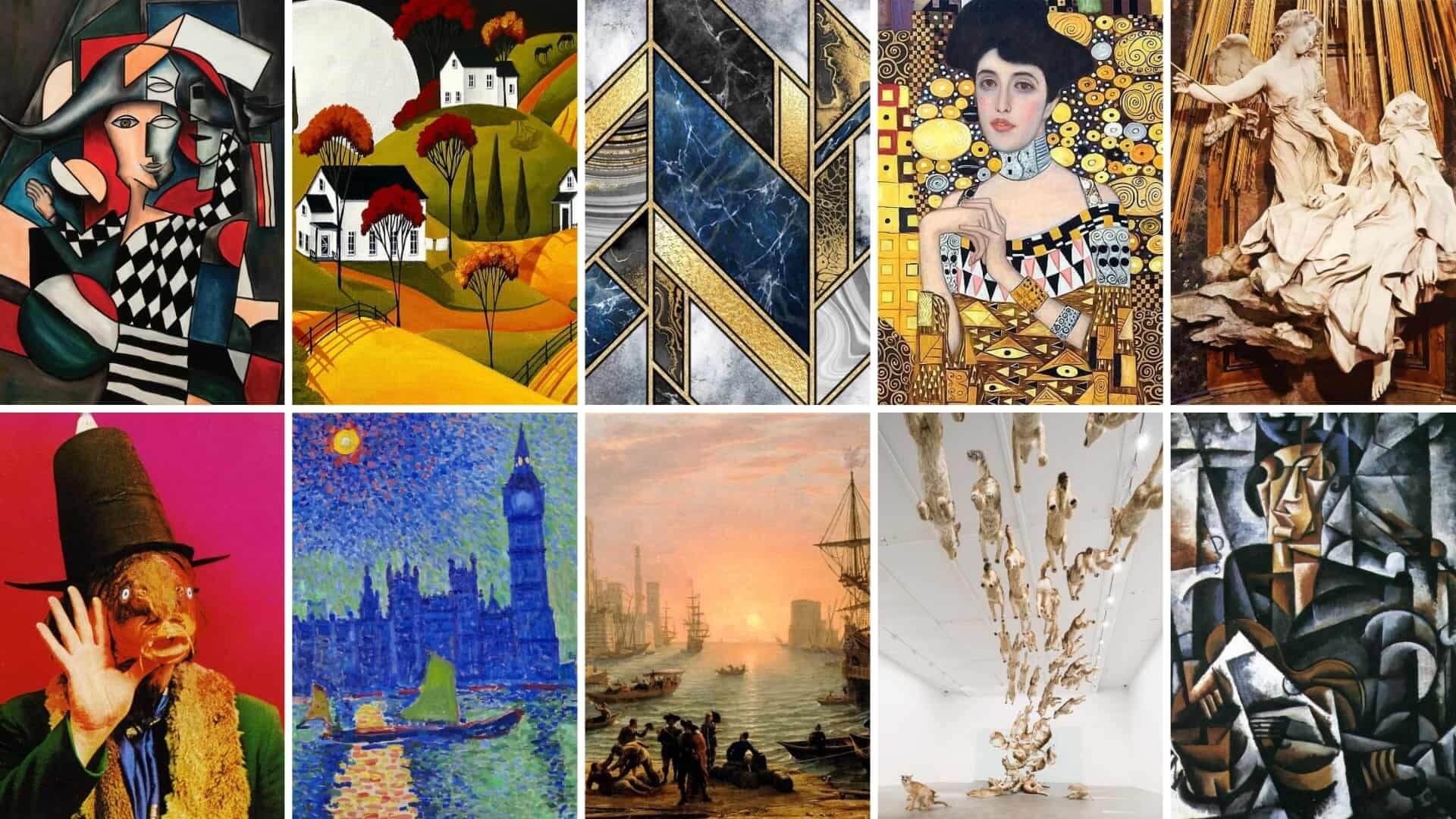
Table of Contents
- The Role of Art in Defining Visual Perception: Shapes, Interpretation, and Emotional Resonance
- Abstract Art and the Reconfiguration of Geometric and Organic Shapes
- Modern Art Movements and Deliberate Shape Distortion
- Color Theory and Shape: The Emotional Syntax of Visual Composition
- Architecture and Urban Design as Functional Art
- Architectural Shapes and Societal Values
- Technological Capabilities and Formal Innovation
- Le Corbusier’s Modulor System: Proportional Harmony in Design
- Analyzing a City’s Skyline: A Step-by-Step Visual Narrative Assessment
- Organic vs. Geometric Urban Shapes: Pedestrian Movement and Psychological Comfort
- Digital Art and the Evolution of Shape in Virtual Spaces
- Blockchain-Based Interactivity and the Redefinition of 2D/3D Shapes
- Five Emerging Digital Tools for Real-Time Shape Manipulation
- Glitch Art and the Aestheticization of Digital Corruption
- Craftsmanship and Handmade Shapes in Functional Objects: Cultural Narratives Through Form
- Cultural Stories and Philosophical Ideas Embedded in Traditional Pottery Shapes
- Functional vs. Symbolic Purposes of Shapes in Tools, Baskets, and Musical Instruments
- Transformative Processes: Heat, Pressure, and the Alchemy of Shape
- The Science of Shape in Nature and Its Artistic Mimicry
- Biomimicry in Artistic Materials and Functional Design
- Fractal Geometry: Artistic Abstraction vs. Natural Occurrence
- Flowchart: How Natural Shapes Influenced Hokusai’s and Dalí’s Signature Styles
- Synesthesia and the Cross-Sensory Mapping of Shapes
- Interactive and Participatory Art Shaping Audience Experience
- Kinetic Sculptures and the Illusion of Shape in Motion
- Designing an Interactive Installation with Physical Shape Deformation
- Haptic Feedback in Virtual Reality Art
- Public Art Projects Redefining Shape Through Community Collaboration
Art does not merely depict shapes—it redefines them, embedding meaning into the geometric and organic forms that structure our visual world. From the distorted canvases of Cubist masters to the parametric curves of modern skylines, shapes serve as silent storytellers, encoding cultural values, technological innovation, and even emotional responses. This exploration examines how art manipulates perception across disciplines—whether through the deliberate fragmentation of Surrealist compositions, the functional poetry of Brutalist architecture, or the dynamic fluidity of digital NFTs—demonstrating that every line, curve, and void carries intentional weight.
The interplay between shape and interpretation extends beyond aesthetics into the tangible: traditional pottery shapes preserve ancestral philosophies, while biomimetic designs replicate nature’s efficiency to solve contemporary challenges. Interactive installations further blur the boundary between observer and creation, where kinetic sculptures and VR feedback systems transform passive viewers into active participants. By dissecting these layers—from abstract theory to hands-on craftsmanship—we uncover how shapes, once static, evolve into living dialogues between artist, medium, and audience.
The Role of Art in Defining Visual Perception: Shapes, Interpretation, and Emotional Resonance
Art does not merely reflect perception—it actively reshapes how humans interpret geometric and organic forms, challenging the brain’s default categorization of objects. Abstract art, in particular, dismantles the rigid boundaries between representation and interpretation, forcing viewers to engage with shapes as fluid constructs rather than fixed entities. By distorting perspective, proportion, and spatial relationships, artists compel observers to question preconceived notions of reality, thereby expanding the cognitive frameworks through which everyday objects are understood. This process extends beyond aesthetics, influencing fields such as design, psychology, and even technology, where shape manipulation informs user interfaces, architectural layouts, and visual communication strategies.The interplay between abstraction and perception is most evident in modern art movements that prioritized formal experimentation over mimetic accuracy. These movements did not seek to depict the visible world but to expose its underlying structures—often through deliberate distortions that exposed the subjective nature of visual experience. The resulting works serve as case studies in how shape, when divorced from context, becomes a vehicle for emotional and intellectual provocation.
Abstract Art and the Reconfiguration of Geometric and Organic Shapes
Abstract art systematically dismantles the hierarchical relationship between form and function in objects, replacing it with a dynamic where shapes exist as autonomous entities. Geometric abstraction, for instance, reduces complex forms to their essential components—circles, squares, and triangles—while organic abstraction emphasizes fluidity, asymmetry, and the illusion of movement. This approach disrupts the viewer’s automatic recognition of objects, prompting a shift from passive observation to active reconstruction of meaning.The psychological impact of these distortions lies in their ability to trigger Gestalt principles—laws of perceptual organization that describe how humans group visual elements into coherent wholes. For example:
Artists exploit these principles to create optical illusions or ambiguous figures (e.g., Rubin’s vase), where the same visual data yields competing interpretations. This ambiguity forces the brain to engage in multistable perception, a phenomenon where the mind oscillates between interpretations—a technique later adopted in cognitive psychology to study attention and decision-making.
Modern Art Movements and Deliberate Shape Distortion
Several 20th-century movements systematically distorted shapes to challenge conventional perception, often with radical political, philosophical, or scientific implications. Below is a comparative analysis of key movements, their defining techniques, and cultural repercussions:| Movement | Key Artist | Signature Shape Manipulation | Cultural Impact |
|---|---|---|---|
| Cubism (1907–1914) | Pablo Picasso, Georges Braque |
|
Cubism dismantled the Renaissance illusion of depth, influencing architecture (e.g., Le Corbusier’s modular designs), film (e.g., montage techniques in Soviet cinema), and even quantum physics metaphors (e.g., Werner Heisenberg’s uncertainty principle as a visual parallel).It also democratized art by rejecting the "mastery" of perspective, paving the way for abstract expressionism. |
| Surrealism (1924–1966) | Salvador Dalí, René Magritte, Max Ernst |
|
Surrealism’s shape manipulations reflected Freudian psychoanalysis, influencing advertising (e.g., dreamlike imagery in campaigns), film (e.g., David Lynch’s Eraserhead), and even AI-generated art where "uncanny" compositions dominate. |
| De Stijl (1917–1931) | Theo van Doesburg, Piet Mondrian |
|
De Stijl’s principles underpinned modernist design, from corporate logos (e.g., IBM’s early branding) to urban planning (e.g., Brasília’s modular architecture). Its emphasis on balance and order also aligned with mid-century corporate aesthetics. |
| Op Art (1950s–1960s) | Bridget Riley, Victor Vasarely |
|
Op Art bridged art and science, influencing visual effects in film (e.g., 2001: A Space Odyssey), UI/UX design (e.g., dynamic loading screens), and even medical imaging (e.g., MRI contrast patterns). |
Color Theory and Shape: The Emotional Syntax of Visual Composition
While shape defines the structure of visual perception, color acts as its emotional syntax, altering how viewers interpret forms and their implied meanings. The intersection of color and shape is governed by color psychology, contrast theory, and cultural conditioning, creating a feedback loop where hues amplify or suppress the perceived properties of geometric and organic shapes.Key mechanisms include:
1. Chromatic Contrast and Shape Perception
2. Hue Saturation and Shape Legibility
3. Color Temperature and Spatial Illusions
Architecture and Urban Design as Functional Art
Architecture and urban design serve as tangible manifestations of societal values, technological advancements, and cultural aspirations, blending aesthetic expression with functional necessity. The deliberate selection of shapes—whether the angular rigor of Brutalism or the fluid complexity of parametricism—does not merely serve visual appeal but encodes ideological priorities, structural innovation, and spatial experiences. These forms interact dynamically with human perception, influencing movement, emotional resonance, and even collective identity within urban environments. The interplay between geometric precision and organic fluidity further reveals how design choices reflect broader historical contexts, from industrialization’s emphasis on raw materials to digital-era explorations of computational fluidity.The evolution of architectural styles demonstrates a direct correlation between form and societal progress. For instance, Brutalism’s exposed concrete structures emerged as a response to post-war reconstruction, symbolizing durability and social equity, while parametricism’s algorithmic curves reflect contemporary obsessions with data-driven design and environmental adaptability. These shapes are not passive elements but active participants in shaping urban narratives, where every line and volume contributes to a city’s visual and functional language.
Architectural Shapes and Societal Values
Architectural shapes function as visual metaphors for the values and priorities of their time, translating abstract ideals into physical reality. The choice of form—whether the monumental symmetry of neoclassical architecture or the asymmetrical dynamism of Deconstructivism—reveals underlying philosophies about order, chaos, or technological mastery. These shapes also reflect material constraints and advancements: the skeletal steel frames of the 19th century liberated structures from load-bearing walls, enabling unprecedented spatial fluidity, while 21st-century parametric designs leverage computational tools to optimize form for sustainability and performance.The relationship between shape and societal values extends to urban governance and collective memory. For example, the repetitive, modular housing blocks of the International Style embodied modernist utopianism, aiming to democratize living spaces through efficiency and uniformity. Conversely, the organic curves of Frank Lloyd Wright’s Prairie Style embodied a rejection of industrialization, advocating for harmony with natural landscapes. These forms are not merely decorative but encode ethical stances—whether toward equality, individualism, or ecological stewardship—making architecture a potent medium for societal dialogue.
Technological Capabilities and Formal Innovation
Advancements in materials science and digital fabrication have expanded the possibilities of architectural expression, allowing shapes to transcend traditional constraints. The advent of reinforced concrete in the early 20th century enabled Brutalism’s bold, textured forms, while advancements in computational design (e.g., parametric modeling) have facilitated the creation of complex, adaptive geometries. These innovations are not merely aesthetic but address functional demands, such as improved structural efficiency, energy optimization, or spatial flexibility.For instance, the Gherkin (30 St Mary Axe) in London exemplifies how parametric design integrates environmental performance with iconic form. Its elliptical shape reduces wind resistance, enhancing energy efficiency while creating a visually striking silhouette that reinforces London’s skyline as a symbol of 21st-century innovation. Similarly, Zaha Hadid’s Heydar Aliyev Center in Baku demonstrates how algorithmic design can generate fluid, sculptural forms that prioritize both aesthetic impact and functional fluidity. These examples illustrate how technology and form coalesce to redefine urban landscapes, where every curve or angle is a testament to human ingenuity.
Le Corbusier’s Modulor System: Proportional Harmony in Design
Le Corbusier’s Modulor system, introduced in 1948, represents a seminal attempt to reconcile human-scale proportions with architectural design through mathematical precision. The system integrates the golden ratio (φ ≈ 1.618) with the average height of a man (1.83 meters), creating a modular grid that harmonizes structural, functional, and aesthetic considerations. This approach ensures that architectural elements—from door heights to ceiling spans—align with human ergonomics, fostering both practicality and visual harmony.The Modulor is not merely a proportional tool but a philosophical framework that bridges art and engineering. By standardizing measurements, it aimed to eliminate the disconnect between industrial production and handcrafted aesthetics, embodying the modernist ideal of a "machine for living." The system’s influence persists in contemporary design, where proportional analysis remains critical for balancing functionality and beauty. For example, the Unité d’Habitation in Marseille exemplifies how Modulor-inspired proportions create a cohesive urban living environment, where every element—from staircases to windows—reflects deliberate mathematical relationships.
"The Modulor is a measure of harmony, a section of gold, a measure of man. It is a means of reconciling the two great rival tendencies of our epoch: the hand and the machine."
—Le Corbusier, The Modulor (1950)
Analyzing a City’s Skyline: A Step-by-Step Visual Narrative Assessment
A city’s skyline is a dynamic composition of shapes that narrates its historical layers, cultural identity, and technological aspirations. To dissect this visual narrative, a structured analysis should examine four key dimensions: dominant shapes, spatial hierarchies, material textures, and symbolic motifs. This process reveals how architectural forms interact to create a cohesive—or fragmented—urban image.The following procedure outlines a methodical approach to decoding a skyline’s visual language:
1. Identify Dominant Shapes and Their Frequencies
Begin by categorizing buildings based on their primary geometric characteristics (e.g., spires, arches, cubes, or organic forms). Note which shapes recur most frequently and their vertical distribution. For example, a skyline dominated by spires may reflect a historical or religious influence, while a prevalence of glass facades could indicate a contemporary, corporate identity.
2. Map Spatial Hierarchies and Focal Points
Assess how shapes create visual focal points, such as a central tower or a contrasting low-rise structure. Hierarchies emerge from scale, height, and placement; for instance, a single iconic skyscraper (e.g., the Burj Khalifa in Dubai) can dominate a skyline, while clusters of mid-rise buildings may form secondary nodes. This layering influences pedestrian perception and urban wayfinding.
3. Examine Material and Textural Contrasts
The interplay of materials—such as glass, stone, or concrete—adds depth to the skyline’s visual narrative. A juxtaposition of rough, textured Brutalist forms against sleek glass towers can symbolize a city’s evolution from industrial to post-industrial eras. Textures also affect light absorption and reflection, altering the skyline’s appearance across different times of day.
4. Decode Symbolic and Cultural Motifs
Many skyline elements carry cultural or historical significance. For example, the Sydney Opera House’s sail-like forms evoke maritime heritage, while the Petronas Towers’ twin spires symbolize Islamic architectural traditions. Identifying these motifs requires research into the city’s history and the intentions of its architects.
5. Evaluate Psychological and Emotional Resonance
Finally, consider how the skyline evokes emotional responses. A harmonious, balanced composition may convey stability, while a chaotic or fragmented skyline might reflect urban sprawl or rapid development. Surveys or observational studies can quantify how residents and visitors perceive the skyline’s emotional impact, linking form to collective psyche.
Organic vs. Geometric Urban Shapes: Pedestrian Movement and Psychological Comfort
The contrast between organic and geometric urban shapes profoundly influences pedestrian behavior and psychological well-being. While geometric forms—such as grid-based layouts or modular buildings—offer clarity and predictability, organic shapes—like curved pathways or irregular facades—can foster a sense of fluidity and intimacy. This comparison reveals how design choices affect navigation, stress levels, and spatial perception.The following table synthesizes the impacts of organic and geometric shapes on pedestrian movement and psychological comfort, organized by four key metrics:
| Metric | Geometric Shapes | Organic Shapes | Psychological/Pedestrian Impact | ||||||||||||||||||||||||
|---|---|---|---|---|---|---|---|---|---|---|---|---|---|---|---|---|---|---|---|---|---|---|---|---|---|---|---|
| Wayfinding Clarity | High; grid layouts and repetitive forms provide clear orientation cues (e.g., Manhattan’s street grid). | Moderate to low; irregular paths may disorient without additional signage (e.g., Barcelona’s Gaudí-inspired streets). | Geometric designs reduce cognitive load for navigation, ideal for high-traffic areas, while organic designs may induce curiosity or mild confusion, enhancing exploration in leisure zones. | ||||||||||||||||||||||||
| Spatial Enclosure | Can feel rigid or confining; sharp angles may create visual barriers (e.g., Brutalist housing blocks). | Encourages enclosure through soft curves, fostering a sense of security and intimacy (e.g., traditional Mediterranean plazas). | Geometric enclosures may increase stress in densely populated areas, whereas organic forms promoteDigital Art and the Evolution of Shape in Virtual SpacesThe intersection of digital innovation and artistic expression has redefined the boundaries of shape manipulation, transcending static 2D and 3D constraints through blockchain interactivity, generative algorithms, and immersive technologies. Unlike traditional mediums, digital art leverages dynamic transformations—such as real-time morphing, procedural generation, and user-triggered alterations—to create shapes that evolve based on data, viewer interaction, or algorithmic logic. This paradigm shift extends beyond aesthetic experimentation into functional and conceptual territories, where shapes become malleable entities governed by computational rules rather than fixed physical properties.The democratization of digital tools has further accelerated this evolution, enabling artists to explore shape as a fluid, adaptive medium. From NFTs that embed ownership and interactivity into geometric forms to VR environments where three-dimensional shapes respond to biometric inputs, digital art challenges conventional perceptions of permanence and authorship. Below, the discussion examines how blockchain technology redefines traditional shapes, highlights emerging tools for real-time manipulation, explores glitch art’s subversion of digital errors, and analyzes TeamLab’s immersive installations as a case study in fluid shape dynamics. Blockchain-Based Interactivity and the Redefinition of 2D/3D ShapesBlockchain technology introduces a revolutionary layer to digital art by embedding interactivity, provenance, and dynamic properties into shapes through smart contracts and decentralized ledgers. Traditional 2D shapes, such as vector-based illustrations or pixel art, gain new dimensions when tokenized as NFTs, where their geometric properties can be altered based on ownership, transaction history, or external data feeds. For example, an NFT representing a polygon may morph its angles or colors in response to on-chain events, such as the purchase of additional tokens or the integration of real-world sensor data.Three-dimensional shapes in digital art also undergo transformation. Artists leverage blockchain to create "programmable matter," where 3D models evolve based on collective input or algorithmic triggers. Projects like Refik Anadol’s Machine Hallucinations demonstrate how machine learning processes vast datasets to generate fluid, ever-changing 3D forms, while platforms like SuperRare or Foundation allow artists to embed interactive scripts within NFTs, enabling shapes to respond to viewer actions or environmental variables. The result is a departure from static representation toward dynamic, participatory geometry, where shapes are no longer passive objects but active systems. "In blockchain-based digital art, the shape is not merely a visual element but a computational entity—its form is determined by code, consensus, and user interaction, blurring the line between art and algorithm." — Dmitri Cherniak (Artist & Blockchain Researcher)The implications extend to ownership and authorship. Unlike traditional art, where a shape’s integrity is fixed by the artist’s hand, blockchain-enabled works allow for collaborative evolution, where multiple contributors can influence a shape’s trajectory over time. This challenges the notion of artistic finality, positioning shapes as living artifacts whose definitions are co-created by technology and community. Five Emerging Digital Tools for Real-Time Shape ManipulationThe proliferation of digital tools has equipped artists with unprecedented capabilities to manipulate shapes in real time, often integrating AI, physics engines, and immersive interfaces. Below are five transformative tools reshaping how shapes are conceived, generated, and interacted with in virtual spaces.
Glitch Art and the Aestheticization of Digital CorruptionGlitch art exploits the inherent instability of digital systems to transform errors—such as compression artifacts, buffer overflows, or data corruption—into intentional, shape-based statements. Unlike traditional art, which seeks perfection in form, glitch art embraces controlled imperfection, using technical failures to critique digital culture, expose the fragility of data, and redefine shape as a product of malfunction. The movement emerged in the late 1990s with artists like Rosa Menkman, who analyzed digital artifacts (e.g., JPEG compression errors, corrupted video frames) as visual noise with artistic potential.Shapes in glitch art often emerge from data degradation, where pixels or polygons fail to render correctly, creating abstract forms that resemble fractal distortions, geometric hallucinations, or organic mutations. For example: Artists employ tools like Processing, Pure Data, or custom scripts to intentionally induce glitches, often by manipulating bit-depth, color channels, or memory allocation. The result is a shape language of error, where digital corruption becomes a narrative device—commenting on the ephemerality of digital storage, the alienation of technology, or the beauty of system failure. Projects such as Mariana Castillo Deball’s The Universal Machine (2014) or Dmitri The relationship between shape and symbolism in functional objects is a study in duality: an object must perform its intended role while simultaneously conveying deeper cultural or philosophical resonance. This balance is particularly evident in tools, containers, and instruments where ergonomics and symbolic motifs coexist. Below, the discussion explores how craftsmanship encodes stories through shape, examines the functional-symbolic duality of everyday objects, and highlights the transformative processes that turn raw materials into vessels of cultural heritage. Cultural Stories and Philosophical Ideas Embedded in Traditional Pottery ShapesPottery shapes serve as tangible manifestations of cultural philosophies, often reflecting cosmologies, ethical frameworks, or historical narratives. For example, Japanese kintsugi (金継ぎ) transforms broken ceramics into objects of beauty through the application of lacquer mixed with powdered gold, silver, or platinum. The irregular, golden seams symbolize wabi-sabi—the acceptance of imperfection and transience—as well as the Japanese concept of kintsugi as a metaphor for resilience and renewal. Each repaired fracture tells a story of survival, mirroring the Confucian ideal of mottainai (wastefulness as moral failing).Similarly, African Adinkra symbols, originally used in funerary cloths by the Akan people of Ghana, are etched or stamped onto pottery, stools, and household items. Symbols like Gye Nyame (Except for God) or Sankofa (Go back and fetch it) encode proverbs and philosophical teachings. The shape of a pot’s rim or the pattern of a clay vessel’s surface may depict Adinkra motifs, transforming utilitarian objects into pedagogical tools that reinforce communal values. In Navajo pottery, the use of geometric patterns—such as the Cloud Pattern or Roadrunner Design—reflects the tribe’s spiritual connection to the land and their creation myth, where shapes like zigzags represent lightning bolts or sacred pathways. The process of shaping clay into these symbolic forms is itself a ritual. Potters often mold vessels by hand, using techniques passed down through generations, ensuring that each piece adheres to cultural protocols. For instance, Haniwa figurines from ancient Japan were crafted to accompany the deceased in the afterlife, their elongated, stylized forms mirroring the human body or mythical creatures. The act of shaping clay into these effigies was not merely artistic but a spiritual practice, linking the physical object to the unseen world. Functional vs. Symbolic Purposes of Shapes in Tools, Baskets, and Musical InstrumentsThe duality of form in functional objects reveals how shape dictates both practicality and cultural significance. Below is a comparative table illustrating how tools, containers, and instruments balance utility with symbolic meaning:
Transformative Processes: Heat, Pressure, and the Alchemy of ShapeThe creation of meaningful shapes in craftsmanship relies on mastering the physical properties of materials through controlled manipulation. Techniques such as forging, blowing, or coiling exploit the interaction between heat, pressure, and time to reshape raw materials into objects that are both functional and symbolic.In blacksmithing, the process begins with heating metal—often iron or steel—to a malleable state in a forge. The blacksmith then uses a hammer and anvil to shape the metal through drawing, bending, or punching, creating tools like knives, swords, or horseshoes. The Navajo silversmith, for instance, uses a combination of lost-wax casting and hand-filing to craft intricate jewelry, where the shape of a squash blossom (ts’idii) or a rainbow (diyin dine’é) is not just decorative but a representation of agricultural abundance and divine promise. The heat of the forge and the precision of the hammer transform a lump of metal into a vessel of cultural identity. Glassblowing, another transformative craft, relies on the fluidity of molten glass to create shapes that are both fragile and enduring. Venetian murano glassmakers, for example, shape glass into millefiori (thousand flowers) patterns or latticino (lattice) designs, where the internal structure of the glass mirrors the natural world. The process involves inflating a glob of glass with a blowpipe, then decorating it with tools or colored canes before annealing it to remove stress. The resulting objects—whether a goblet with a twisted stem or a bead with embedded Adinkra symbols—are testaments to the interplay between physics and artistry. In textile crafts, such as Navajo rug weaving, the shape of the rug itself—often rectangular or trapezoidal—follows the dimensions of a dwelling, while the patterns woven into it tell stories of clan affiliations, animal migrations, or celestial events. The Filipino barong tailor uses pleating and draping techniques to create shapes that reflect social status; the These applications underscore how biomimicry transcends imitation, fostering a symbiotic relationship between art and engineering where form follows function while evoking natural beauty. Fractal Geometry: Artistic Abstraction vs. Natural OccurrenceFractal geometry, characterized by self-similar patterns at varying scales, serves as a unifying language between abstract art and natural phenomena. The Mandelbrot set, a cornerstone of fractal mathematics, exemplifies how recursive algorithms can generate infinitely complex visual structures. In contrast, natural fractals—such as the branching of Romanesco broccoli, the coastlines of Britain, or the spiral arms of galaxies—emerge from growth processes governed by physical laws rather than mathematical computation.A comparative analysis reveals key distinctions: The intersection of these domains is evident in generative art, where artists use fractal algorithms to simulate natural processes, blurring the line between creation and observation. For example, Algorithmic landscapes by Karl Sims or interactive fractal visualizations in digital art mimic the dynamic, adaptive nature of ecosystems, inviting viewers to perceive mathematical abstraction as an extension of organic form. Flowchart: How Natural Shapes Influenced Hokusai’s and Dalí’s Signature StylesArtists throughout history have systematically studied natural shapes to refine their techniques, often developing signature styles rooted in observational science. Below is a structured flowchart illustrating the cognitive and creative pathways through which Katsushika Hokusai (Japanese ukiyo-e master) and Salvador Dalí (Surrealist painter) integrated natural forms into their works:
Synesthesia and the Cross-Sensory Mapping of ShapesSynesthesia—a neurological condition where stimulation of one sensory pathway (e.g., sight) involuntarily triggers experiences in another (e.g., sound or taste)—has subtly shaped how artists perceive and represent shapes. While not all artists are synesthetes, the phenomenon offers a framework for understanding how form, color, and sensory associations coalesce in creative output. Studies suggest that synesthetic individuals may exhibit heightened sensitivity to geometric patterns, interpreting shapes as auditory frequencies or tactile textures.Key examples of synesthesia-inspired artistic associations include: - Visual-Gustatory Synesthesia: The intricate latticework of honeycombs or the branching of ferns has been associated with bitter or umami tastes, possibly due to the sharp, jagged edges triggering tactile-gustatory cross-wiring in the brain. - Cross-Disciplinary Applications: The effectiveness of such works lies in their ability to dissolve the divide between observer and participant, using technology, mechanics, or communal effort to manipulate form dynamically. From Calder’s mobiles to VR haptic systems, these approaches demonstrate how shape is not merely a visual or tactile attribute but a malleable entity shaped by interaction. Below, the discussion examines kinetic sculptures, participatory installations, haptic feedback in digital art, and community-driven public projects as case studies in redefining artistic form through audience engagement. Kinetic Sculptures and the Illusion of Shape in MotionKinetic sculptures exploit movement to alter the perception of shape, where balance, gravity, and airflow become integral to form. Alexander Calder’s mobiles exemplify this principle, using counterweights and pivot points to create sculptures that shift subtly—or dramatically—depending on environmental factors. The interplay of motion and form in these works defies static representation, as the viewer’s gaze must adapt to a shape that is never fully fixed.The design of kinetic sculptures often incorporates: "Kinetic art is not about the object itself but the dialogue it initiates between the artwork and its environment—including the observer’s body and mind." Designing an Interactive Installation with Physical Shape DeformationCreating an installation where visitors’ actions physically deform shapes requires integrating sensors, actuators, and responsive materials to translate input into tangible feedback. Below is a step-by-step framework for developing such a project, using pressure-sensitive floors as a case study.Step 1: Define the Interactive Trigger Step 2: Select Responsive Materials and Mechanisms Step 3: Integrate Feedback Loops Step 4: Test and Iterate for User Experience Haptic Feedback in Virtual Reality ArtVirtual reality (VR) art expands the possibilities of shape manipulation by introducing haptic feedback—simulated touch—that allows users to "feel" digital forms that lack physical substance. This technology bridges the gap between visual perception and tactile interaction, enabling artists to explore abstract or impossible geometries with immersive precision.Key applications of haptic feedback in VR art include: "Haptic feedback in VR is not about replicating reality but about redefining tactile language—allowing users to experience shapes that defy physics, such as a liquid that solidifies on command or a surface that shifts between smooth and rough."Challenges in haptic VR art include: Public Art Projects Redefining Shape Through Community CollaborationPublic art installations that rely on collective participation often recontextualize shape as a dynamic, socially constructed phenomenon. These projects transform static forms into living entities shaped by cultural narratives, memory, and shared experience. Notable examples include:Case Study 1: The Wave (2008) – Michael Young, Sydney The ubiquity of art in shaping our visual landscape reveals a profound truth: shapes are not passive elements but active agents in human experience. Whether through the deliberate distortion of a Surrealist canvas, the harmonious proportions of Le Corbusier’s Modulor, or the real-time deformation of a VR sculpture, every form carries layers of intent—cultural, scientific, or emotional. As we navigate an era where digital tools and interactive media redefine creativity, the study of shape becomes a bridge between tradition and innovation, reminding us that perception itself is a malleable art. In recognizing this, we do not merely observe the world; we reshape it through the very forms we encounter. |
Leave a Comment
Comments are moderated before appearing. The data you submit is processed according to the Privacy Policy of ir.msu.ac.zw.